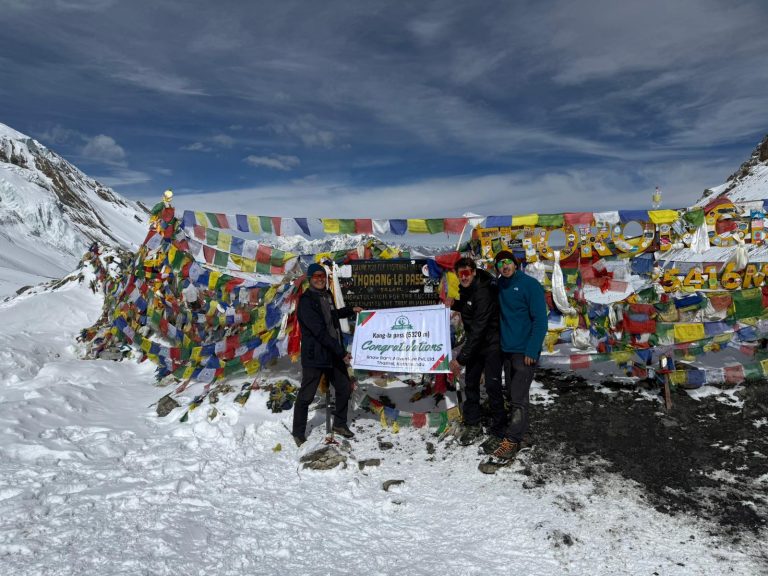
Manaslu Tsum Valley Trek – 14 Days

5.0 from 08 reviews
  • Accommodation Hotel(4-star) in Kathmandu/Tea House during Trek
  • Duration 14
  • Trip Difficulty Easy to Moderate
  • Activities Trekking, Hiking, Sightseeing & Cultural Exploration
  • Best Time Spring and Autumn
  • Max. Elevation Mu Gompa(3700m/12174ft)
  • Group Size Min-02 pax
  • Transportation Car/Jeep/Hice/Public Bus
  • Meals Breakfast, Lunch & Dinner (BLD) During Trek
  • Start/End Kathmandu/Kathmandu

Overview

Tsum Valley remained closed to outside trekkers until 2008, helping preserve its distinctive Tibetan Buddhist culture and traditional way of life. Before that, it was closed off completely — sealed by geography, tucked right against the Tibetan border, and left alone by the modern world for long enough that its people still speak their own dialect and follow religious customs that haven’t changed much in centuries. This 14-day trek with Snow Bank Adventure takes you in from Philim, off the main Manaslu Circuit trail, up into that valley, and back out again the same way, giving you a shorter, more focused alternative to the full Manaslu Circuit — one built almost entirely around culture and monasteries rather than a high mountain pass.

Because Tsum sits so close to the international border, Nepal keeps it classed as a restricted area. You can’t trek it alone: every visitor needs a registered guide and a group of at least two people. We handle the permits, the jeep transport on the rough early stretch of road, and the teahouse bookings, so your only job once you land in Kathmandu is to walk, look around, and let the place do its thing.

Why Choose This Trek?

  • Tsum Valley — a culturally preserved valley shaped by Tibetan Buddhist tradition, still largely unchanged by tourism.
  • Mu Gompa, Rachen Gompa & Milarepa’s Cave — centuries-old monasteries and meditation sites, well off Nepal’s busier trekking routes.
  • Ganesh Himal, Boudha Himal & Sringi Himal — a constant high-mountain backdrop for nearly the entire trek.
  • Living Tibetan Buddhist culture — prayer walls, chortens, prayer flags, and villages where daily life still runs on old rhythms.
  • A genuine wildlife sanctuary — Tsum’s century-old non-violence tradition means animals here aren’t hunted, so blue sheep and other wildlife are unusually easy to spot.
  • Real solitude — fewer than a few thousand trekkers visit Tsum each year, even in peak season.
  • Forest-to-alpine scenery — pine, bamboo, and rhododendron forest at the start, opening into stone-walled highland fields further in.
  • A shorter commitment than the full circuit — 14 days instead of 16 to 24, without giving up the cultural depth that makes this region worth visiting.

What Makes This Trek Special?

Tsum Valley — The Cultural Heart

Locally, Tsum valley is sometimes called Tsombo, meaning vivid or brilliant, and it’s easy to see why once you’re standing in it — stone villages set against fields worked by hand, yaks grazing on the hillsides, and monasteries that have been active, working religious sites for hundreds of years rather than tourist attractions. The isolation that kept outsiders out until 2008 is exactly what preserved all of this. You’ll walk through Chumling, Chokhangparo, and Nile, three villages that each feel a little more remote and a little more Tibetan than the last.

The Journey In — River, Forest, Village

Getting into Tsum is its own kind of scenery shift. You’ll follow the Budhi Gandaki River gorge on foot, through pine and bamboo forest with rhododendron blooming lower down in season, crossing the river back and forth on suspension bridges. Somewhere past Philim, the trail leaves the main Manaslu Circuit route and the landscape starts to open up — narrow gorge gives way to wider, stone-walled fields, and the first mani walls and chortens start appearing on the trail.

Sacred Ground — The Shagya Tradition

One detail sets Tsum apart from almost anywhere else in Nepal: in 1920, local religious leaders declared the valley a Shagya — a non-violence zone. Hunting, fishing, slaughtering animals, and even harming trees have been prohibited here for over a century, a commitment the community renewed and formally re-declared as recently as 2023. It’s not a rule enforced for tourists; it’s a living part of how Tsumba people practice their faith. One practical result: meat isn’t served in Tsum Valley teahouses, and wildlife here is noticeably less skittish around people than elsewhere in Nepal.

Why Choose This Instead of the Full Manaslu Circuit?

Both routes start the same way and share the same lower valley, but they take you to very different places after that.

Manaslu Circuit Only Manaslu Tsum Valley Trek
Focused on circling Mt. Manaslu Focused on Tsum Valley’s culture and monasteries
High mountain scenery and a big pass crossing Villages, monasteries, and highland scenery — no high pass
Crosses Larke-La (around 5,106–5,160m) Turns back before reaching Larke-La
Typically 16+ days 14 days
Ends with a demanding high-altitude finish Ends with a gentler return through the valley you came up

Choose the standard Manaslu Circuit if crossing Larke-La and completing the full loop around the mountain is the priority. Choose this Tsum Valley trek if what you actually want is the deepest possible cultural experience in the shortest reasonable time, without the physical demands of a 5,000m+ pass crossing.

Tsum Valley & Buddhist Heritage

This is the part of the trek most people remember longest, so it’s worth knowing what you’ll actually see and do, not just that “culture” is involved.

At Mu Gompa, sitting near 3,700 meters, you’ll find one of the valley’s most important monasteries — built in 1936 by a Bhutanese monk, Drupa Rinpoche, on a remote hillside with the high Himalaya as a backdrop. Rachen Gompa, a nunnery lower in the valley, houses resident nuns and a Tibetan doctor who treats both religious residents and local villagers; visitors are welcome but expected to move quietly and respectfully around the artwork and prayer halls. Further along the trail, Milarepa’s Cave marks a site where the eleventh-century yogi Milarepa is said to have meditated — a small, atmospheric stop rather than a grand building, but one with real weight to it if you know the story.

Between these major sites, the trail itself is lined with religious markers: mani walls carved with prayers (always passed on the left, by local custom), chortens marking significant spots, and long strings of prayer flags fading in the wind between villages. None of this is staged. It’s simply what a working Tibetan Buddhist valley looks like day to day, and walking through it for over a week gives you a much deeper sense of it than a single monastery visit anywhere else in Nepal could.

A Day in the Life

Lower valley (Days 3–4): River, forest, and terraced fields. You’re following the Budhi Gandaki upstream, in and out of pine and bamboo forest, crossing swaying suspension bridges, with farming villages dotting the trail.

Entering Tsum (Days 5–7): The trail leaves the main circuit route and climbs into the valley proper. Villages get smaller and quieter, mani walls start appearing more often, and the air noticeably cools as you gain altitude toward Chumling and Chokhangparo.

Deep Tsum (Days 8–9): Nile and the hike up to Mu Gompa. This is the cultural high point of the trek — monasteries, prayer flags, and views back down a valley that very few outsiders have ever walked.

The way back (Days 10–12): Retracing your steps through Chumling and down to Philim, the scenery reversing itself — alpine terrain giving way to forest, then to the wider gorge near Machha Khola.

Trek Difficulty & What to Expect

This is graded moderate — accessible to fit, experienced trekkers without requiring technical climbing skills or gear. Most days run 5–7 hours of walking, with a couple of longer 6–7 hour stretches. There’s no high pass on this itinerary, so the altitude exposure is real but less extreme than on the full Manaslu Circuit — you’ll spend time around 3,300–3,700 meters at the trek’s highest point, rather than crossing 5,000 meters. Accommodation throughout is teahouse-based: simple, family-run lodges with basic rooms, shared bathrooms, and hearty local food (though no meat, in keeping with Tsum’s non-violence tradition).

Best Time to Trek

Spring (March–May) and autumn (September–November) are the recommended seasons, with clear skies, moderate temperatures, and rhododendrons blooming at lower elevations in spring. Winter (December–February) is workable for well-prepared, cold-tolerant trekkers, though some upper teahouses close and trail sections can ice over. Monsoon (June–August) is best avoided — Tsum itself sits in a rain shadow and gets relatively little direct monsoon rain, but the approach trail along the Budhi Gandaki carries a real landslide risk during this period.

Permits Required

  • Tsum Valley Restricted Area Permit (RAP) — the core permit for entering the valley.
  • Manaslu Restricted Area Permit (RAP) — required since the route shares its early stages with the Manaslu Circuit trail.
  • Manaslu Conservation Area Permit (MCAP) — Tsum Valley sits within the Manaslu Conservation Area, so this permit applies here too.

All of these are arranged for you as part of your booking. Permit costs are reviewed periodically by the Nepali government, so we confirm current pricing at the time of booking rather than quoting a fixed figure here.

Outline Itinerary

Day 1: Arrival at Tribhuvan International Airport, Kathmandu (1,300m)

Day 2: Kathmandu sightseeing and trek preparation

Day 3: Kathmandu to Machha Khola (890m), via Arughat and Soti Khola — 9–10 hours

Day 4: Machha Khola to Jagat (1,340m) — 6–7 hours

Day 5: Jagat to Chisopani (1,600m) — 4–5 hours

Day 6: Chisopani to Chumling (2,386m) — 6–7 hours

Day 7: Chumling to Chokhangparo (3,010m) — 4–5 hours

Day 8: Chokhangparo to Nile (3,361m) — 5–6 hours

Day 9: Nile to Mu Gompa (3,700m) to Burgi Village (3,245m) — 6–7 hours

Day 10: Burgi Village to Chumling (2,386m) — 5–6 hours

Day 11: Chumling to Philim (1,570m) — 6–7 hours

Day 12: Philim to Machha Khola (890m) — 6–7 hours

Day 13: Machha Khola to Kathmandu, via Soti Khola and Arughat — 7–8 hours

Day 14: Final departure
Detailed Itinerary

Day 01: Arrival at TIA Kathmandu (1,300m/2,464ft) Subsequent to arriving in Kathmandu, a delegate from Snow Bank Adventure will pick you up and take you to your hotel. At night, there will be an appreciated supper hosted by Snow Bank Adventure.
  • Accommodation: Overnight at Star Hotel
Day 02: Kathmandu Sightseeing After breakfast, we start our voyage through four astonishing UNESCO World Heritage Sites. These incorporate the compositionally rich Durbar Square, the hallowed Hindu sanctuary of Pashupati Nath, the fascinating ‘Monkey Temple’ (Swayambunath), and Bauddha Nath Stupa which is probably the most enthralling stupa on the planet.
  • Accommodation: Overnight at Star hotel
  • Meals: B
Day 03: Kathmandu – Arughat(670m/2,200ft) – Soti Khola(710m/2,330ft) -Machha Khola(890m/2920ft)8-9 hours drive After breakfast, we will take the road trip on the four wheel jeep to Sotikhola. The trip is about 7 hours long depending upon the condition of the road. We will take the Prithvi Highway, Kalupandey Highway, and Benighat Larkey Highway. About 40% of the journey is on the graveled postal road. However, the scenery of the terraced farmlands, villages, and forests seen from the jeep is outstanding. We will spend overnight in Sotikhola on the bank of Budi Gandaki River at the foothill of a gigantic hill.
  • Accommodation: Overnight at tea house
  • Meals: B L D
Day 04: Machha Khola – Jagat(1,340m/4,395ft) 6-7 hours trek The trail starts to get difficult from this day onwards. We will have to walk occasional uphill on this. The crossing of the suspension bridge and sight of the waterfalls along the way will keep us busy and mesmerized. The chill mountain breeze starts to hit you and the Himalayan wilderness feeling will overpower you.
  • Accommodation: Overnight at tea house
  • Meals: B L D
Day 05: Jagat – Chisopani(1,600m/5,248ft) 4-5 hours trek Subsequent to finishing with the ACAP method, we move over a rough edge to Salleri, and after that slip to Sirdibas. The valley augments a bit as the trail proceeds up to Ghatta Khola. Proceed upstream to a long straightforward hanging span. Move up to Philim, an enormous Gurung town. Philim valley is outstanding for Japanese made school and police headquarters. Stroll past Philim toward the north over a woodland with the perspectives on the narrowing valley we reach Chisopani.
  • Accommodation: Overnight at tea house
  • Meals: B L D
Day 06: Chisopani – Chumling (2,386m/7,827ft) 6-7 hours trek After Ekle Bhatti crosses the chasm and thirty minutes stroll in the correct side we get the opportunity to see the huge and excellent cascade and enter the pine tree backwoods. Dive down to the trail setting off to the Tsum Valley. Move through pine and rhododendron backwoods. Appreciate the perspectives on Himalchuli mountain at 7893 meters and Boudha Himal from Lokpa, a little wonderful town. Pass Lokpa, drop 30 minutes towards Lungwa Khola, and climbing jick jack troublesome trail further two hours north through pines and rhododendrons we reach Gumlung. Intersection the Siyar Khola, at long last land at Chumling, from where we can see Shringi Himal. Visit the old Chumling gompa and the stone avenues of the town.
  • Accommodation: Overnight at tea house
  • Meals: B L D
Day 07: Chumling -Chokhang paro (3,010m/9,903ft) 4-5 hours trek Cross the suspension connect onto the contrary bank. Appreciate the extraordinary perspectives on Ganesh Himal. Stroll past Rainjam to Serpu Khola crossing another extension we touch base at the Gho Village. Other proceeds with 2 hours move to Tsum takes us to the town of Chhokangparo. Assuming the rainclouds hold back; appreciate the perspectives on Himalchuli at 7893 meters and Ganesh Himal at7140m.
  • Accommodation: Overnight at tea house
  • Meals: B L D
Day 08: Chokhangparo – Nile (3,361m/11,058ft) 5-6 hours Trek While moving above Chokhangparo, better to be cautious about height issues. Stroll past Lamagaon intersection rope suspension extension to the Rachen Gompa, which is additionally outstanding as Nunnery Gompa as well. We make a little visit and after that, we cross the Shiar Khola. Keep strolling through the very much oversaw towns Lar (miniaturized scale hydro control), Phurbe, and Pangdun. Leaving old noteworthy Stupa of Buddha in a manner crossing the town of Chhule, climb upstream and cross the extension to at long last touch base at the Nile. In the event that you consider we can make your visit to a renowned religious community of Chhule which is situated in the highest point of territory.
  • Accommodation: Overnight at tea house
  • Meals: B L D
Day 09: Nile – Mu Gompa(3,700m/12,174ft) – Burgi Village(3,245m/10,644ft) 6-7 hours trek We are presently practically near the Tibetan fringe. Stroll toward the west bank of the valley through the Tibetan scenes. Move up to the Mu Gompa. we make a touring of the entire Mu Gompa Region. Mu Gompa is the biggest cloister in the locale. The Gompa lies at the most astounding and most remote piece of the Tsum Valley. In the wake of investigating the Mu Gompa territory. We likewise visit the cloister. At that point, we make a visit to the Dhephu Doma Gompa. Trek back through Chhule and Phurbe, on the east bank of the Shiar Khola. At long last, we touch base at Burgi village. Move up to the Milarepa’s Cave Milarepa Cave (piren phu) is known for its hypnotizing looks at Poshyop Glacier, Kipu Himal, and Churke himal.
  • Accommodation: Overnight at tea house
  • Meals: B L D
Day 10: Burgi Village – Chumling(2,386m/7,827ft) 5-6 hours Keep trekking viewing the greenery of nature and plummet down to Chhokang Paro once more. From their keep dropping to Gho. Dropping further, we touch base at the extension over the Sarpu Khola. Trekking along the lower Tsum Valley takes you to again Chumling.
  • Accommodation: Overnight at tea house
  • Meals: B L D
Day 11: Chumling – Philim (1,570m/5,103ft) 6-7 hours trek The trail proceeds to Lokpa. After lunch south on a level trail, we push forward. Appreciate the dazzling Samba Falls. At long last land at Philim following 6 or 7 hours in length trekking. A trail goes through the Phillim village that prompts the Ganesh Himal Base Camp.
  • Accommodation: Overnight at tea house
  • Meals: B L D
Day 12: Philim – Machhakhola (890m/2920ft) 6-7 hours trek Trek begins today from Philim to Khorlabesi by means of Jagat and Tatopani. Dive down to Sirdibas and we at long last reach to Jagat. Further plummet takes us to Yaruphant. The parched Tibetan atmosphere presently offers an approach to subtropical green vegetation. Keep trekking to Dobhan. At last touch base at Tatopani. There is a natural aquifer at Tatopani. Whenever intrigued, you may plunge yourself in the natural aquifer and loosen up your worn-out muscles by absorbing yourself the underground aquifer. If not keep strolling all over from Tatopani to reach Khorlabesi, our rest place for the afternoon.
  • Accommodation: Overnight at tea house
  • Meals: B L D
Day 13: Machha Khola - Soti Khola – Arughat – Kathmandu(1300m/4264ft )3-4 hours trek, 8-9 hrs drive Move up to the edge of Kyorpani. Slip down to the falling cascade. Trekking further touches base at Arkhet. Cross the Arkhet Khola. We are presently leaving the Budhi Gandaki Valley. Land at Sante Bazaar; go through the woodlands to Maltar. At last, going by the hydroelectric plant following the stone lanes, we touch base at the Arughat Bazar. Back to Kathmandu along the banks of the Marsyangdi and Trishuli waterways with amazing perspectives on green slopes, mountains, cultivating porches, and towns on the two sides of the street. To praise the fruitful fulfillment of our voyage, we will have a goodbye supper at night.
  • Accommodation: Overnight at hotel
  • Meals: B L D
Day 14: Final Departure Our adventure in Nepal reaches an end today! A Snow Bank Adventure delegate will drop you off at the air terminal roughly 3 hours before our booked flight. On our approach to home, you will have a lot of time to design your next experience in the magnificent nation of Nepal.
  • Accommodation:
  • Meals: B

Includes & Excludes

Cost Includes
  • Airport transportation( Pick-up and Drop)
  • Farewell dinner
  • Kathmandu sightseeing by private vehicle with government registered Tour guide.
  • Accommodation 3 nights(4-star) Hotel in Kathmandu with Bed and breakfast
  • Transportation from the starting  and ending point of trekking by private vehicle
  • Three times meals(B, L, D) and tea, coffee during the trek
  • Safe drinking water( treated with chlorine and iodine)
  • Permit of a trek(TIMS, Conservation, and National park fee)
  • All types of necessary government  paperwork and government taxes
  • Guide and porter(meals, wages, Insurance & transpiration )
  • An English speaking  government registered guide and porter( 1 porter for 2 guest )
  • Trekking equipment like a raincoat, sleeping bag, down jacket, and walking pole
Cost Excludes
  • Personal expenses
  • Personal & medical insurance
  • Rescue evacuation by Helicopter in Emergency case
  • Beverage and Bar bills( soft drinks, hard drinks, and mineral water)
  • Boiled water
  • Lunch & Dinner in Kathmandu except for  farewell dinner
  • Electronic devise recharge
  • Wi-fi during the trek
  • Tips for the Guide and Porter

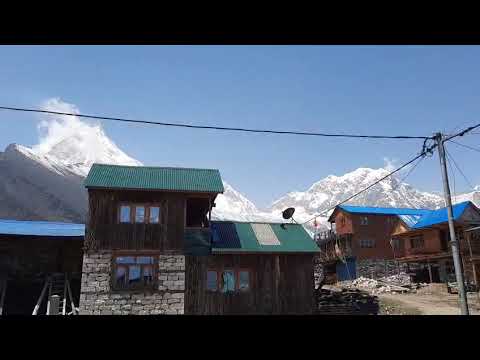
Trek Video

Trip video preview

Packing List

  • Trekking Poles ( highly recommended for stability)
  • Backpack ( 40 - 55 L with rain cover)
  • Duffel Bag ( if using porters)
  • Day Pack ( 20 - 30L, for your daily carry)
  • Dry Bags/ Zip locks bags ( gear/ tech weather protection)
  • Headlamp with extra batteries
  • Water bottle (s) or hydration bladder ( 2- 3l total capacity)
  • Water purification system ( SteriPen, filtration bottle, or purification tablets)
  • Lightweight towel ( quick dry, microfiber)
  • Personal Care and First Aid Kits
  • Toiletries ( toothbrush, toothpaste, biodegradable soap, small shampoo, comb, razer)
  • Personal prescription medications ( with enough for extra days)
  • Village tea houses provide meals, but energy snacks can be costly or limited on the trek. So, include Energy/ protein bars, nuts and chocolate.
  • Smartphone ( with Nepal SIM/ local data), Plug adapter ( Nepal uses Type C, D and M outlets)
  • Lightweight Padlock ( for securing duffle/ room)

FAQs

1. How difficult is the 14-Day Tsum Valley Trek?
The trek is generally considered moderate. Most trekking days involve around 4–7 hours of walking on uneven mountain terrain, with gradual altitude gain. No technical climbing skills are required.

2. What is the highest point of the Tsum Valley Trek?
The itinerary reaches approximately 3,700m at Mu Gompa, making it considerably lower than the Larkya La crossing on the full Manaslu Circuit.

3. Is Tsum Valley a restricted trekking area?
Yes. Tsum Valley is designated as a restricted trekking area, so trekkers need the appropriate restricted-area permits and must travel with an authorized guide.

4. Can I trek Tsum Valley independently?
The package is operated as a guided restricted-area trek. Independent trekking is not permitted under the package's stated requirements.

5. What permits are required for the Tsum Valley Trek?
The itinerary requires a Tsum Valley Restricted Area Permit, Manaslu Restricted Area Permit, and Manaslu Conservation Area Permit.

6. What is the best season for the Tsum Valley Trek?
Spring (March–May) and autumn (September–November) are the recommended seasons because of generally favorable weather and mountain visibility.

7. What monasteries can I visit during the trek?
The itinerary includes important cultural sites such as Mu Gompa, Rachen Gompa, and Milarepa's Cave.

8. Is the Tsum Valley Trek suitable for beginners?
Fit beginners with good preparation may be able to complete it, but the trek involves several consecutive days of mountain walking, uneven terrain, and altitude. Previous trekking experience is beneficial.

9. How is the Tsum Valley Trek different from the Manaslu Circuit?
The Tsum Valley Trek focuses primarily on Tibetan Buddhist culture, monasteries, villages, and the remote valley itself. The full Manaslu Circuit continues onward to higher alpine terrain and crosses Larkya La.

10. How long does the Tsum Valley Trek take?
This Snow Bank Adventure itinerary takes 14 days from arrival to departure, including Kathmandu preparation/sightseeing, transportation, trekking, and departure.