


Pikey Peak Trek – 7 Days
US $825

Tucked behind the Manaslu massif, in the far north of Gorkha district, sits a valley most trekkers in Nepal have never heard of. Tsum Valley stayed closed to outsiders until 2008. That’s decades after routes like Everest Base Camp and Annapurna were already busy with visitors. The late opening is a big part of why Tsum still feels so different today.
The valley follows its own rules, too. Local leaders declared the valley a Shyagya (also spelled Shagya) zone in 1920 — a formal ban on hunting and killing any living creature. The community renewed that commitment as recently as 2023. It isn’t a rule for tourists. It’s a living part of how the Tsumba people practice their Buddhist faith, and it shows: wildlife here moves freely, mostly unbothered by people.
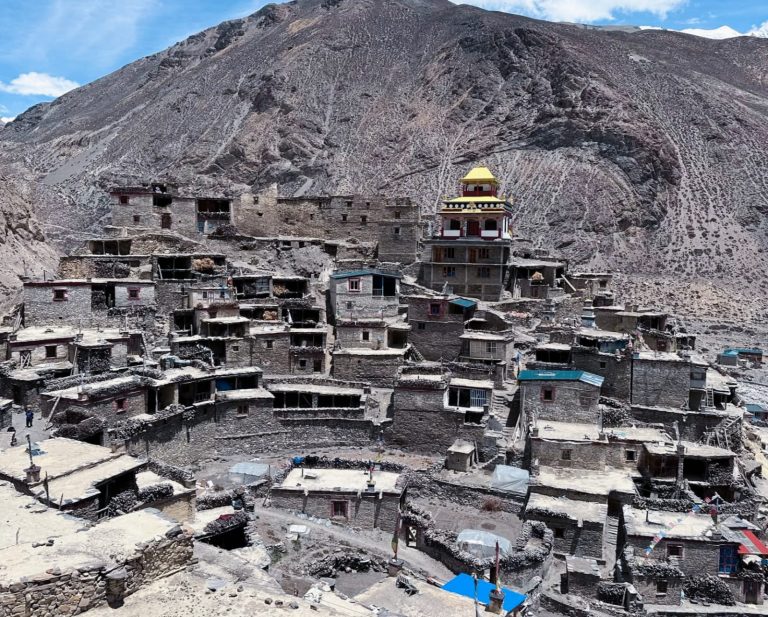
This trek follows the Budhi Gandaki River from Maccha Khola up through Jagat and Philim, then turns off the main Manaslu trail at Lokpa and climbs into Tsum Valley itself. Along the way, you’ll pass through traditional stone-built villages — Chumling, Chhokangparo, and Nile — and visit some of the valley’s most sacred sites: Rachen Gompa, a working nunnery where a resident Tibetan doctor still treats both nuns and local villagers; Piren Phu, a cliffside cave where the 11th-century yogi Milarepa is said to have meditated; and Mu Gompa, the valley’s largest monastery, built in 1936 by a Bhutanese monk named Drupa Rinpoche, sitting at roughly 3,700 meters near the Tibetan border.
Spring (March–May) and autumn (September–November) are the best seasons, with clear skies, comfortable temperatures, and rhododendrons blooming at lower elevations in spring.
Winter (December–February) is possible for well-prepared, cold-tolerant trekkers, but some teahouses in the upper valley close, and sections of trail can ice over.
Monsoon (June–August) is best avoided. Tsum Valley itself sits in a rain shadow and gets relatively little direct rainfall, but the approach trail along the Budhi Gandaki carries a real landslide risk during this period.
| Duration | 12 Days (Kathmandu to Kathmandu) |
| Max Altitude | 3,700 m at Mu Gompa |
| Trip Cost | $1,099 per person |
| Best Season | Spring (March–May) and Autumn (September–November) |
| Difficulty | Moderate |
| Group Size | Please confirm current policy — see note below |
| Guide | Licensed guide required — Tsum Valley is a restricted area |
| Permits Needed | Tsum Valley Restricted Area Permit, Manaslu Restricted Area Permit, MCAP |
| Starting Point | Maccha Khola, reached by road from Kathmandu |
Note: group-size requirements for restricted areas have been in flux — confirm the current rule with your permit contact before publishing this figure.
| Day | Route | Altitude | Time |
|---|---|---|---|
| 1 | Kathmandu → Maccha Khola | 930 m | 9 hrs drive |
| 2 | Maccha Khola → Jagat | 1,340 m | 6 hrs trek |
| 3 | Jagat → Lokpa | 1,804 m | 6 hrs trek |
| 4 | Lokpa → Chumling | 2,386 m | 5 hrs trek |
| 5 | Chumling → Chhokangparo | 3,031 m | 6 hrs trek |
| 6 | Chhokangparo → Nile | 3,361 m | 6 hrs trek |
| 7 | Nile → Mu Gompa (overnight) | 3,700 m | 4 hrs trek |
| 8 | Mu Gompa exploration → Nile | 3,700 m → 3,361 m | 4 hrs trek |
| 9 | Nile → Chumling | 2,386 m | 6–7 hrs trek |
| 10 | Chumling → Philim | 1,570 m | 6–7 hrs trek |
| 11 | Philim → Maccha Khola | 930 m | 6–7 hrs trek |
| 12 | Maccha Khola → Kathmandu | 1,330 m | 8 hrs drive |
Want the fuller picture before you book? These guides go deeper on the culture, history, and logistics behind this trek:
The trip starts early. After breakfast in Kathmandu, you'll drive out through Dhading and Arughat, then on toward Soti Khola and Maccha Khola.
It's a long day in the vehicle, but a good one. The road drops out of the Kathmandu valley and winds through rice terraces, small roadside villages, and river valleys — your first real look at rural Nepal before the trekking even begins.
Once you reach Maccha Khola, you'll check into your lodge and get ready for the days ahead on foot.
Today's when the actual trekking starts. The trail follows the Budhi Gandaki River, crossing a handful of suspension bridges and cutting through forest, waterfalls, and narrow gorge sections.
You'll pass through Kholabesi and Tatopani — the second named for a natural hot spring nearby — before reaching Jagat, a stone-paved village and an important checkpoint on the Manaslu trekking corridor.
From Jagat, the trail continues through Philim, a large Gurung village surrounded by steep cliffs, thick forest, and waterfalls.
Past Philim, you'll keep climbing toward Lokpa — the actual gateway into Tsum Valley. This is where the route splits away from the main Manaslu Circuit trail and turns north into quieter, less-visited terrain.
This is the day you properly enter Tsum Valley. The trail climbs through forest and mountain terrain before reaching Chumling, one of the valley's traditional settlements.
Chumling is a good first chance to see Tsumba village life up close — stone houses built in the old style, prayer flags strung between rooftops, and (weather permitting) your first clear views toward Ganesh Himal.
The trail climbs steadily today as you move deeper into upper Tsum Valley, passing more mani walls, chortens, and small settlements along the way.
You'll end the day in Chhokangparo, one of the valley's most significant villages. If there's time in the afternoon, it's worth wandering through the village and taking in the surrounding alpine scenery before dinner.
More traditional villages and Buddhist landmarks line the trail today. Depending on conditions, this is often where Piren Phu (Milarepa's Cave) gets added as a stop — a cliffside meditation site tied to one of Tibetan Buddhism's most famous yogis.
As you climb, the forest thins out and the landscape opens into wide alpine views. You'll end the day in Nile, one of the highest year-round settlements in the valley.
Today you reach the valley's most important monastery. The trail climbs from Nile up to Mu Gompa, built in 1936 by the Bhutanese monk Drupa Rinpoche and perched near the Tibetan border.
Rather than rushing this as a same-day round trip, you'll spend the night right here — giving you a proper sunset and sunrise at one of the highest, most remote monasteries in Nepal.
A full morning to explore Mu Gompa properly — the monastery itself, its courtyard of prayer flags, and (conditions permitting) a short visit to Dhephu Doma Gompa nearby.
This extra day is the main difference between rushing through Tsum Valley's cultural highlight and actually experiencing it. In the afternoon, you'll descend back down to Nile for the night.
Today marks the start of the journey back down the valley. You'll retrace the trail through Chhokangparo and on to Chumling.
The descent brings a noticeable shift in scenery — the high alpine terrain gradually gives way to greener forest and lower mountain slopes. Seeing the same villages and monasteries from the opposite direction often reveals details you missed on the way up.
The trail continues down through Lokpa and on to Philim, following the Budhi Gandaki River corridor the whole way.
As you lose altitude, the vegetation gets noticeably lusher, and the high-mountain feel of the past week gives way to the greener, warmer lower valley.
The final full trekking day. You'll pass back through Jagat and Kholabesi, crossing the same river gorges, suspension bridges, and waterfalls that marked the start of the trip — this time heading the other way.
Once you reach Maccha Khola, there's time to relax, clean up, and take stock of a trek well done.
After breakfast, you'll begin the drive back to Kathmandu, retracing the road through Soti Khola, Arughat, and Dhading.
Once you arrive in Kathmandu, the trek officially wraps up.
The trek is rated moderate. Most days involve 5–7 hours of walking on well-established trail, with a gradual altitude gain. No technical climbing skills are needed.
The itinerary reaches Mu Gompa at approximately 3,700 meters — considerably lower than the 5,106–5,160 meter Larkya La crossing on the full Manaslu Circuit.
Yes. Tsum Valley is a government-designated restricted area, so trekkers need the correct permits and must travel with a licensed guide.
No. A licensed guide is mandatory for this restricted area regardless of group size or experience level.
This itinerary requires a Tsum Valley Restricted Area Permit, a Manaslu Restricted Area Permit, and the Manaslu Conservation Area Permit (MCAP), since the trail shares its early stages with the Manaslu Circuit route.
Spring (March–May) and autumn (September–November) offer the clearest skies and most stable weather. Monsoon (June–August) is best avoided due to landslide risk on the approach trail.
The itinerary includes Rachen Gompa, Piren Phu (Milarepa's Cave), and Mu Gompa — the valley's largest monastery, built in 1936.
Fit beginners with good preparation can complete it, but several consecutive days of mountain walking and altitude exposure mean some prior trekking experience is a real advantage.
Spending the night at Mu Gompa, rather than rushing there and back in one day, gives trekkers real time to explore the monastery, its courtyard, and nearby Dhephu Doma Gompa — without racing daylight.
No. In keeping with Tsum Valley's Shyagya non-violence tradition, animals aren't hunted or slaughtered in the valley, so teahouse menus lean vegetarian throughout.