

Featured
Private Trip

If you want to see everything the Annapurna region is known for, not just tick off Base Camp — this is the itinerary built for that. Over 15 days, you’ll combine the sunrise views from Poon Hill with the full Annapurna Sanctuary experience, with enough time along the way to actually enjoy Kathmandu, Pokhara, and the Gurung villages you pass through, rather than rushing between them.
The trek starts with a drive from Pokhara to Nayapul, then climbs through Tikhedhunga and the famous stone steps of Ulleri into Ghorepani, your base for the pre-dawn hike up Poon Hill (3,210m). From there, the trail runs through Tadapani and Chhomrong before climbing steadily to Machhapuchhre Base Camp and, finally, Annapurna Base Camp (4,130m) itself, standing beneath Annapurna I (8,091m). The return route loops back down through Bamboo, Jhinu Danda — where you can properly relax in the natural hot springs — and Pothana, finishing with a walk into Dhampus Phedi and a drive back to Pokhara.
This itinerary is a good match for:
The 15-day itinerary adds extra time in Kathmandu and Pokhara, a noticeably more relaxed trekking schedule, and more chances to actually enjoy the villages and mountain scenery along the way, rather than just passing through them. If the 10-day trek is about efficiency and balance, the 15-day version is about comfort, culture, and getting the fullest possible experience of the Annapurna region.
The two itineraries also cover different ground. The 10-day route heads up through Ghandruk; this one adds the Poon Hill sunrise hike via Ghorepani and loops back down through Jhinu Danda and Pothana — so beyond the extra time, you’re seeing more of the region, not just spending longer to see the same thing.
The extra days here aren’t just added for length — they’re what turns this from “a trek to Base Camp” into a complete Annapurna journey.
No technical climbing is required — this is a teahouse trail throughout — but it is a long trek with real altitude to manage. Most days run 5-7 hours, with a few longer days (the Poon Hill morning plus the trek to Tadapani, and the push to Machhapuchhre Base Camp and ABC) running 6-7 hours.
Altitude. You’ll reach 4,130m at Annapurna Base Camp, with several nights spent above 2,500m before that. The gentler daily pace here genuinely reduces (though doesn’t eliminate) the risk of altitude sickness compared to shorter itineraries — still, drink plenty of water and pace yourself.
Permits. You’ll need an Annapurna Conservation Area Permit (ACAP) and a licensed guide, both arranged as part of your booking.
Best time to go. Spring (March-May) for rhododendron blooms, or autumn (September-November) for the clearest mountain views — both are peak season, so book early.
Day 1: Arrival in Kathmandu (1,400m)
Day 2: Kathmandu sightseeing
Day 3: Drive from Kathmandu to Pokhara (827m) — 5-6 hrs
Day 4: Pokhara to Nayapul to Ulleri (1,940m) — 80 min drive, 5-6 hrs trek
Day 5: Ulleri to Ghorepani (2,750m) — 5-6 hrs trek Day 6: Ghorepani to Poon Hill (3,210m) to Tadapani (2,630m) — 6-7 hrs trek
Day 7: Tadapani to Chhomrong (2,210m) — 5-6 hrs trek
Day 8: Chhomrong to Himalaya (2,840m) — 6-7 hrs trek
Day 9: Himalaya to Machhapuchhre Base Camp (3,700m) to Annapurna Base Camp (4,130m) — 6-7 hrs trek
Day 10: Annapurna Base Camp to Bamboo (2,310m) — 5-6 hrs trek
Day 11: Bamboo to Jhinu Danda (1,760m) — 5-6 hrs trek
Day 12: Jhinu Danda to Pothana (1,990m) — 6-7 hrs trek
Day 13: Pothana to Dhampus Phedi (1,130m) to Pokhara (827m) — 2-3 hrs trek, 25 min drive
Day 14: Fly back to Kathmandu (1,400m) — 25 min flight
Day 15: Final departure
Day 1: Arrive in Kathmandu (1,400m)
Land at Tribhuvan International Airport, where you'll be met and transferred to your hotel.
Day 2: Kathmandu sightseeing
A full day exploring Kathmandu's UNESCO World Heritage Sites — Durbar Square, Pashupatinath Temple, Swayambhunath, and Boudhanath Stupa — before heading into the mountains.
Day 3: Drive from Kathmandu to Pokhara (827m)
5-6 hrs A scenic drive west, with the option to break the trip up with stops along the way. Pokhara's lakeside setting makes it a good place to relax before the trek begins.
Day 4: Pokhara to Nayapul to Ulleri (1,940m)
80 min drive, 5-6 hrs trek A short drive to Nayapul, then the trek begins through Tikhedhunga before the famous climb up more than 3,000 stone steps into Ulleri — a tough first afternoon, but a good early test of your legs.
Day 5: Ulleri to Ghorepani (2,750m)
5-6 hrs A steady climb through rhododendron forest into Ghorepani, a large village that serves as the base for tomorrow's pre-dawn hike to Poon Hill.
Day 6: Ghorepani to Poon Hill (3,210m) to Tadapani (2,630m)
6-7 hrs An early start (well before sunrise) to reach Poon Hill in time to watch the light hit Dhaulagiri, Annapurna South, and Machhapuchhre. After descending back to Ghorepani for breakfast, you'll continue through rhododendron forest to Tadapani.
Day 7: Tadapani to Chhomrong (2,210m)
5-6 hrs The trail climbs into Chhomrong, a Gurung village built into the hillside that marks the entrance to the Annapurna Sanctuary proper.
Day 8: Chhomrong to Himalaya (2,840m)
6-7 hrs A steep descent out of Chhomrong followed by a climb through Sinuwa, Bamboo, and Dovan, with the forest growing denser and wilder as you go.
Day 9: Himalaya to Machhapuchhre Base Camp (3,700m) to Annapurna Base Camp (4,130m)
6-7 hrs Through Deurali, the trees disappear and the trail opens into alpine terrain. From Machhapuchhre Base Camp, a final short climb brings you into the Annapurna Sanctuary itself, with Annapurna I's south face rising almost directly overhead.
Day 10: Annapurna Base Camp to Bamboo (2,310m)
5-6 hrs After sunrise at ABC, a long but straightforward descent back down through Deurali and Himalaya to Bamboo.
Day 11: Bamboo to Jhinu Danda (1,760m)
5-6 hrs Continue the descent through Sinuwa and Chhomrong to Jhinu Danda, where the natural hot springs by the river are a genuinely good reason to arrive with enough daylight to enjoy them properly.
Day 12: Jhinu Danda to Pothana (1,990m)
6-7 hrs The return route diverges from the outbound trail here, heading through Landruk and up into Pothana — new scenery on the way back, rather than retracing your steps.
Day 13: Pothana to Dhampus Phedi (1,130m) to Pokhara (827m)
2-3 hrs trek, 25 min drive A short final trekking day down to Dhampus Phedi, where a vehicle takes you the rest of the way back into Pokhara.
Day 14: Fly back to Kathmandu (1,400m)
25 min flight A short scenic flight back to the capital, with the afternoon free.
Day 15: Final departure
Transfer to the airport for your international flight home.
Note: distances and daily pace can shift with trail and weather conditions — your guide will confirm the exact plan day to day.
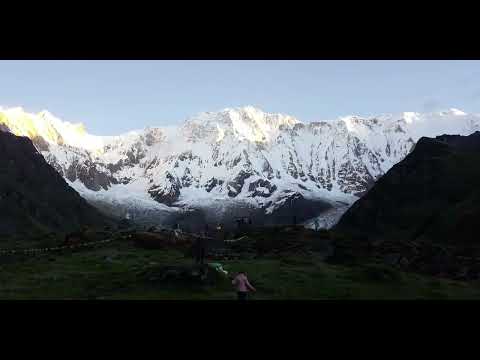
The 15-day itinerary combines both Poon Hill and Annapurna Base Camp while allowing a more relaxed trekking pace. It offers more cultural experiences, diverse scenery, and additional time to enjoy the Annapurna region.
The highest point is Annapurna Base Camp at 4,130 meters (13,550 feet).
Yes. Trekkers with good fitness can complete the trek successfully. The itinerary spreads the walking over more days than shorter ABC treks, making it more manageable for first-time trekkers.
Depending on weather conditions, you'll enjoy views of Annapurna I, Annapurna South, Machhapuchhre (Fishtail), Hiunchuli, Dhaulagiri, Nilgiri, Gangapurna, and several surrounding Himalayan peaks.
Poon Hill is one of Nepal's most famous sunrise viewpoints. The panoramic views of the Annapurna and Dhaulagiri ranges attract trekkers from around the world.
Yes. The natural hot springs at Jhinu Danda are one of the highlights of the return journey and provide a relaxing place to rest tired muscles after several days of trekking.
Accommodation is provided in traditional teahouses throughout the trek and hotels in Kathmandu and Pokhara.
Spring (March–May) and autumn (September–November) are generally considered the best seasons because of stable weather, clear mountain views, and comfortable trekking conditions.
The trek reaches 4,130 meters, so mild altitude symptoms are possible. The gradual itinerary helps reduce risk, but proper hydration and steady pacing remain important.
The 15-day itinerary includes Poon Hill, additional villages, more cultural experiences, and a slower pace. It's designed for travelers who want to experience more of the Annapurna region rather than simply reaching Annapurna Base Camp.

