
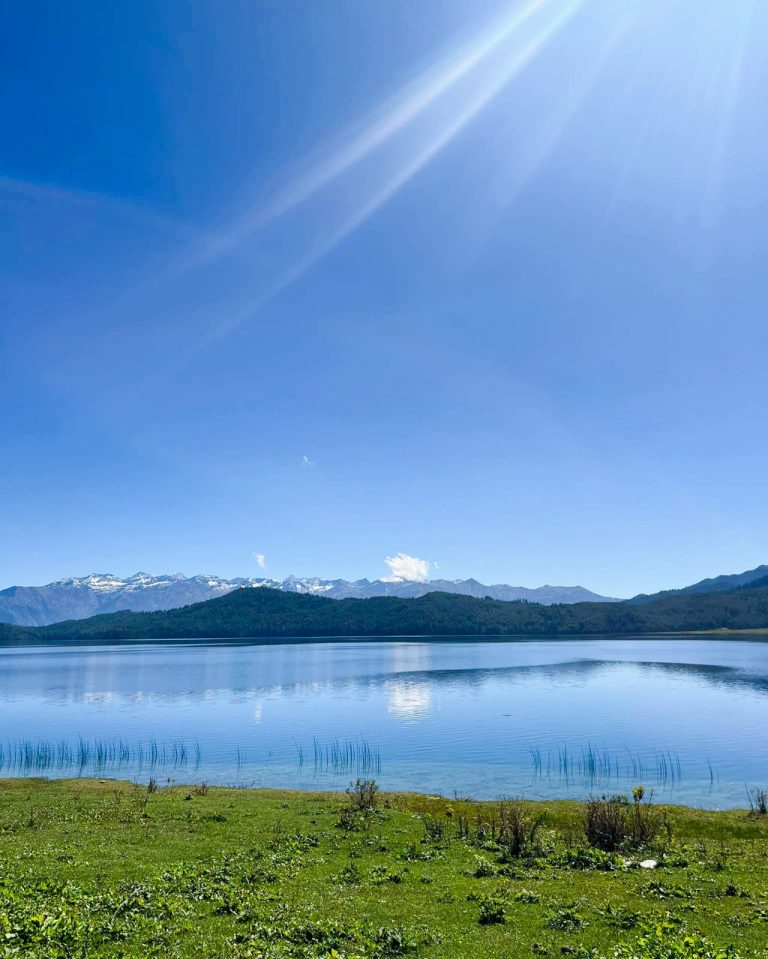
Rara 7 Days Tour
US $499

If you want real Himalayan scenery without giving up two or three weeks of your trip, this is the trek built for exactly that. Over seven days, you’ll climb through rhododendron forest, stay in traditional Gurung and Magar villages, and end up watching sunrise break over Dhaulagiri and Annapurna from Poon Hill (3,210m) — one of the most famous viewpoints in Nepal — all without ever pushing above a moderate altitude.
The trail starts near Nayapul and follows the Modi Khola and Bhurungdi Khola rivers up through Ulleri and into Ghorepani, gaining height gradually through forest, waterfalls, and small mountain villages. From Ghorepani, an early climb to Poon Hill delivers one of the best panoramic mountain views in the country, before the trail continues through Tadapani and Ghandruk on the way back down to Pokhara. It’s short enough to fit into a one-week trip, but it still delivers the kind of scenery people travel across the world to see.
This itinerary works well for a wide range of travelers, which is part of why it’s one of Nepal’s most popular short treks. It suits first-time trekkers visiting Nepal who want a real taste of the Himalayas without committing to something longer or harder. It’s genuinely workable for families traveling with children, given the moderate pace and shorter daily distances, and it makes a strong option for couples after a scenic, relatively relaxed Himalayan trip together. Older travelers who want proper mountain views without extreme altitude will find this route far more forgiving than treks like Annapurna Base Camp or Everest Base Camp.
Nature lovers get plenty to enjoy too — dense forest, birdlife, and quiet trails throughout. Photographers chasing that classic Himalayan sunrise shot get exactly what they’re after at Poon Hill, and anyone with only about a week free in Nepal can complete this trek comfortably within that window. In short: if you want incredible mountain views without the physical demands of a longer trek like ABC, this is built for you.
A lot of travelers land on this exact question, so here’s a straight answer: it depends on what you’re actually after.
This trek is shorter, easier, and reaches a much lower maximum altitude than Annapurna Base Camp, which makes it accessible to a wider range of travelers — including people who wouldn’t attempt ABC’s longer, higher route. Where ABC is built around reaching the heart of the Annapurna Sanctuary after many days of steady climbing, Poon Hill rewards you with a genuinely spectacular Himalayan panorama after just a few days on the trail.
Choose Ghorepani Poon Hill if you want:
If your goal is standing inside the Annapurna Sanctuary itself, surrounded by 7,000 and 8,000-meter peaks on every side, ABC is still the better choice — nothing about this trek replaces that. But if you want outstanding mountain scenery, real cultural contact, and one of the best short treks in the country, Ghorepani Poon Hill is hard to beat.
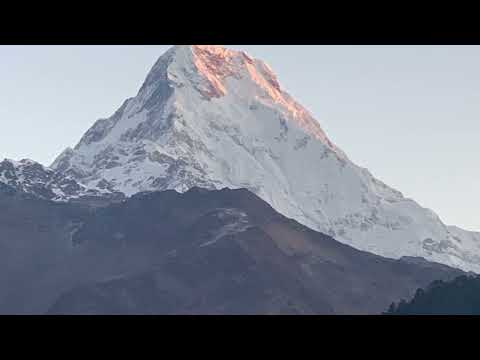
Most people arrive well before dawn, wrapped in every warm layer they packed, watching the stars fade as the eastern sky slowly starts to glow. Then, one by one, the peaks catch the light — Dhaulagiri first, then Annapurna South, Hiunchuli, Machhapuchhre, and Nilgiri, each turning gold as the sun clears the horizon. It only lasts a few minutes, but for a lot of trekkers, it’s the single memory that defines the entire trip.
Trek here in spring and the forest becomes one of the most colorful landscapes in the country. Entire hillsides turn shades of red, pink, and white as thousands of rhododendron trees bloom at once, forming a natural tunnel of color beneath the mountains. Outside flowering season, the same forest is still genuinely pleasant — cool, quiet, and full of birdsong, a welcome change of pace between the more open mountain sections.
Not everyone wants to spend two or three weeks in the mountains, and Ghorepani Poon Hill proves you don’t have to. In under a week, you get mountain villages, forest trails, a genuine Himalayan sunrise, and views of some of Nepal’s most iconic peaks — all without crossing into extreme altitude or needing any previous trekking experience. It’s a serious trek in terms of payoff, without asking for a serious level of commitment to get there.
Sunrise silhouettes, stone villages, suspension bridges, misty forest, terraced farmland, and constant mountain panoramas, Every few hours, the landscape changes enough to feel like you’re walking through a completely different part of Nepal. Whether you’re carrying a proper camera or just shooting on your phone, it’s genuinely hard to come away without good photos here.
Most days start with breakfast in a teahouse dining room, the smell of fresh tea filling the dining room while trekkers lace up their boots.. The trail alternates between stone steps, forest paths, and small villages, with mountain views opening up whenever the trees thin out. Lunch is usually somewhere with a proper view , a terrace overlooking the valley, or a clearing with the Annapurna range visible in the distance.
On the Poon Hill morning itself, the routine flips entirely: you’re up in the dark, climbing by headlamp, standing at the viewpoint shivering slightly until the sunrise makes you forget about the cold. By evening, back in a warm dining room, the day usually ends with tea, conversation with other trekkers, and an early night — tomorrow starts early again.
This trek is graded easy to moderate. No technical climbing is involved, and the trail is well-established and easy to follow throughout. Most days run 4-7 hours, with a mix of steep stone staircases (particularly the climb into Ulleri) and gentler forest paths.
Altitude. The highest point is Poon Hill at 3,210m, Altitude sickness is uncommon on this trek compared with higher Himalayan routes, although everyone responds differently to elevation. Still, drink water and pace yourself, especially on the steeper climbing days.
Permits. You’ll need an Annapurna Conservation Area Permit (ACAP) and a licensed guide, both arranged as part of your booking.
Best time to go. Spring (March-May) for rhododendron blooms, or autumn (September-November) for the clearest mountain views — both are popular seasons, so book teahouses and permits ahead of time.
Day 1: Arrival in Kathmandu (1,400m)
Day 2: Fly to Pokhara (827m), drive to Nayapul, trek to Ulleri (1,940m) — 30-min flight, 5-6 hrs trek
Day 3: Trek from Ulleri to Ghorepani (2,750m) — 4-5 hrs
Day 4: Trek from Ghorepani via Poon Hill (3,210m) to Tadapani (2,630m) — 6-7 hrs
Day 5: Trek from Tadapani via Ghandruk (1,940m) to Pokhara — 6-7 hrs trek, 1 hr 20 min drive
Day 6: Drive back to Kathmandu (1,400m) — 5-6 hrs
Day 7: Transfer to the international airport
Day 1: Arrive in Kathmandu (1,400m)
Land at Tribhuvan International Airport, where you'll be met and transferred to your hotel.
Day 2: Fly to Pokhara (827m), drive to Nayapul, trek to Ulleri (1,940m)
30-min flight, 5-6 hrs trek A short, scenic flight to Pokhara, followed by a drive to the trailhead at Nayapul. From there, the trail follows the Modi Khola to Birethanti, then climbs alongside the Bhurungdi Khola through small villages before a steep, final push up more than 3,000 stone steps into Ulleri — a proper first test for your legs, rewarded by a genuinely good Magar village and early mountain views.
Day 3: Trek from Ulleri to Ghorepani (2,750m)
4-5 hrs A steady climb through dense rhododendron forest, with waterfalls along the way and the air noticeably cooler as you gain altitude. Ghorepani is your base for tomorrow's pre-dawn hike to Poon Hill.
Day 4: Trek from Ghorepani via Poon Hill (3,210m) to Tadapani (2,630m)
6-7 hrs An early start, well before sunrise, for the short climb up to Poon Hill. From the top, on a clear day, you'll see Dhaulagiri, Annapurna I, Annapurna South, Machhapuchhre, Nilgiri, Hiunchuli, and Lamjung Himal all at once — including two of the world's 8,000-meter peaks. After sunrise, you'll descend back to Ghorepani for breakfast, then continue through rhododendron forest to Tadapani.
Day 5: Trek from Tadapani via Ghandruk (1,940m) to Pokhara
6-7 hrs trek, 1 hr 20 min drive The trail descends through forest into Ghandruk, one of the largest Gurung villages in the region, with its own small museum on Gurung culture and history worth a stop if you have time. From Ghandruk, it's a walk down to the roadhead, followed by a drive back into Pokhara.
Day 6: Drive back to Kathmandu (1,400m)
5-6 hrs A scenic road journey back to the capital, or a short domestic flight if you'd rather skip the drive.
Day 7: Transfer to the international airport
Your Nepal trip wraps up with a transfer to the airport for your international flight home.
Note: trail conditions and daily pace can shift slightly depending on weather and season — your guide will confirm the exact plan day to day.
The Ghorepani Poon Hill Trek is considered easy to moderate. Most trekking days involve 4–7 hours of walking on well-maintained trails. While there are many stone staircases—especially around Ulleri—no technical climbing or previous trekking experience is required.
The highest point is Poon Hill (3,210m / 10,531ft), one of Nepal's most famous viewpoints. This altitude is generally considered safe for most travelers and carries a very low risk of altitude sickness.
The best seasons are spring (March to May) and autumn (September to November). Spring offers colorful rhododendron forests in full bloom, while autumn provides clear skies and excellent mountain views.
No. This trek is ideal for beginners and first-time visitors to Nepal. A reasonable level of fitness is enough to complete the route comfortably.
On a clear day, you'll enjoy panoramic views of Annapurna I, Annapurna South, Dhaulagiri, Machhapuchhre (Fishtail), Hiunchuli, Nilgiri, and several other Himalayan peaks.
Yes. The moderate altitude, comfortable teahouse accommodations, and relatively short daily walking distances make this trek a great option for families with older children and active senior travelers.
Yes. You'll need an Annapurna Conservation Area Permit (ACAP). A licensed guide is also required under current Nepal trekking regulations. Snow Bank Adventure arranges all necessary permits before your trek.
You'll stay in local teahouses (mountain lodges) offering private or twin-sharing rooms, warm meals, and welcoming hospitality. Facilities become simpler at higher villages, but they provide everything needed for a comfortable trekking experience.
The risk is very low because the trek reaches only 3,210m. Most travelers complete the route without altitude-related issues, though staying hydrated and walking at a comfortable pace is always recommended.
Ghorepani Poon Hill is shorter, easier, and reaches a much lower altitude than Annapurna Base Camp. It's perfect for travelers with limited time, beginners, families, and anyone wanting spectacular Himalayan views without committing to a longer, more physically demanding trek.
