
Everest Base Camp Trek with Helicopter Return – 12 Days
-
Accommodation Hotel in Kathmandu / Tea House During Trek
-
Duration 12
-
Trip Difficulty Moderate
-
Activities Trekking
-
Best Time Spring and Autumn
-
Max. Elevation 3,870m/12,690ft (Tengboche)
-
Group Size Min-02 pax
-
Transportation Car & Flight
-
Meals B L D During Trek
-
Start/End Lukla to Lukla
Overview
Walk to Everest Base Camp on your own two feet, then skip the multi-day walk back out and fly instead. This 12-day trip gives you the full, hard-earned Everest Base Camp experience — the Khumbu Valley, Sherpa villages, Tengboche Monastery, Kala Patthar’s sunrise — and then closes with a helicopter flight over the same glaciers and peaks you just spent a week and a half walking beneath. You get the achievement and the comfort, without giving up either one.
Why Choose This Trek?
Trek all the way to Everest Base Camp on foot — the real thing, no shortcuts on the way up
Watch sunrise from Kala Patthar, the best viewpoint of Everest in the entire region
Skip the return trek with a scenic helicopter flight instead of walking back out
Save several days that would otherwise go to a repetitive descent
Finish with far less physical fatigue than a standard round-trip trek
See the Khumbu Valley from the air — glaciers, peaks, and villages from a perspective almost no trekker gets
Why Choose the Helicopter Return?
Walking to Everest Base Camp is genuinely tough. Walking back out along the same trail for another 3-4 days is, for a lot of trekkers, the least exciting part of the whole trip — you’ve already seen the villages, crossed the bridges, and taken the photos. The helicopter return solves that.
- It saves 3-4 days that you’d otherwise spend retracing the same path back to Lukla.
- It avoids the repetitive descent — no walking back through villages you’ve already seen.
- It’s genuinely easier on tired knees, since descending is often harder on joints than climbing.
- It gives you views you simply can’t get from the trail — the full shape of the Khumbu Glacier and the surrounding peaks, seen from above.
- It creates a memorable ending to the trek, rather than having the trip fade out over several long, familiar days of walking.
What Makes This Trek Special?
The Lukla flight — one of the most dramatic short flights anywhere, landing on a mountain airstrip surrounded by peaks
Sherpa villages — real communities along the entire route, not staged stops
Namche Bazaar — the Khumbu’s main hub, with markets, bakeries, and lodges built into a natural amphitheater
Tengboche Monastery — the largest monastery in the region, with an outstanding view of Everest and its neighboring peaks
Everest Base Camp itself — the destination every trekker on this route is working toward
Kala Patthar — the best all-round viewpoint of Mount Everest anywhere on the trek
The helicopter finale — after everything it takes to get here, lifting off and watching it all shrink beneath you is the reward for the effort
Who Is This Trek Best For?
This itinerary suits:
Busy professionals who can’t take three full weeks off
Honeymoon couples wanting a shared achievement with a genuinely memorable ending
Photographers, who get both ground-level and aerial shots of the same landscape
Luxury travelers who still want the real trekking experience, not a watered-down version
Repeat visitors to Nepal looking for a fresh way to experience the Everest region
Anyone wanting the maximum experience in the minimum amount of time
What Will You See During the Helicopter Flight?
The flight out isn’t just transport — it’s arguably one of the highlights of the whole trip. Depending on the exact route and weather, expect to see:
- The Khumbu Glacier, laid out beneath you in a way you can’t appreciate from the trail
- Mount Everest itself, along with Nuptse, Lhotse, Ama Dablam, and Pumori
- The valleys and ridgelines you spent the last week and a half walking through
- Suspension bridges crossing the rivers far below
- Monasteries and Sherpa villages, seen from a completely different angle than on foot
Is This Trek Difficult?
Yes — and it’s worth being upfront about that. The helicopter only replaces the walk back down; it does nothing to make the climb up any easier. This is still a genuinely demanding trek, rated moderate to challenging:
- You’ll reach 5,364m at Everest Base Camp and 5,545m at Kala Patthar — real altitude, with real altitude sickness risk.
- Daily walking runs 5-7 hours, with some days longer.
- Two acclimatization days are built in (Namche Bazaar and Dingboche), and skipping the pace they set isn’t recommended.
- No technical climbing is required, but solid fitness and some prior hiking experience make a real difference in how much you enjoy it.
Some companies market the helicopter return as making the trek “easier” — it doesn’t. It just changes how you get back down once you’ve already done the hard part.
Weather & Helicopter Information
Helicopter flights in the Everest region are genuinely weather-dependent, so it’s worth knowing what to expect:
Weather delays happen. Cloud cover or high winds around Gorak Shep or Lukla can delay or postpone flights, particularly outside the main spring and autumn seasons.
Safety comes first. Pilots won’t fly in poor visibility, and flights are sometimes rescheduled for the next available weather window rather than pushed through.
Most helicopter returns fly in two legs, not one straight flight: a short shared helicopter hop from Gorak Shep to Lukla (about 15-20 minutes), followed by a separate flight — helicopter or fixed-wing — from Lukla to Kathmandu. Private charters can sometimes fly further in one leg, but shared flights typically make this stop due to weight and altitude limits.
Shared flights are cheaper; private charters offer more control. A shared seat costs less but depends on other passengers booking the same route; a private charter costs more but flies on your schedule.
Backup plans exist. If the helicopter can’t fly, most operators will either rebook you for the next available slot or arrange a trek back down to Lukla — ask your operator what their specific backup policy is before booking.
Why Travelers Love This Trek
Reaching Everest Base Camp is an achievement in itself. But lifting off by helicopter the next morning gives you a completely different appreciation of the Khumbu Valley. Watching the trails you’ve spent days walking disappear beneath snow-covered peaks is an unforgettable way to end one of the world’s great treks. For a lot of travelers, the helicopter flight ends up being just as memorable as reaching Base Camp itself.
Standing at Everest Base Camp is an unforgettable achievement, but the journey doesn’t end there. The following morning, as your helicopter lifts above the Khumbu Glacier and the world’s highest peaks stretch across the horizon, you’ll see the route you’ve spent days walking from an entirely new perspective. It’s a rare moment that combines accomplishment, reflection, and awe—an ending that few Himalayan adventures can match.
Outline Itinerary
Day 1: Arrival in Kathmandu (1,400m)
Day 2: Fly to Lukla, trek to Phakding (2,651m) — 8km, 3-4 hrs
Day 3: Trek from Phakding to Namche Bazaar (3,440m) — 11km, 5-6 hrs Day 4: Acclimatization day in Namche Bazaar (3,440m)
Day 5: Trek from Namche Bazaar to Tengboche (3,870m) — 10km, 4-5 hrs
Day 6: Trek from Tengboche to Dingboche (4,360m) — 9km, 5-6 hrs
Day 7: Acclimatization day in Dingboche (4,360m)
Day 8: Trek from Dingboche to Lobuche (4,940m) — 7km, 5-6 hrs
Day 9: Trek from Lobuche to Gorak Shep (5,170m) and Everest Base Camp (5,364m) — 13km, 6-7 hrs
Day 10: Hike from Gorak Shep to Kala Patthar (5,545m) and back — 16km, 3-4 hrs
Day 11: Fly to Kathmandu by helicopter
Day 12: Final departure
Detailed Itinerary
Day 1: Arrive in Kathmandu (1,400m)
Land at Tribhuvan International Airport, where a Snow Bank Adventure representative will meet you and take you to your hotel. A welcome dinner is planned for the evening. Accommodation: hotel | Meals: dinner
Day 2: Fly to Lukla, trek to Phakding (2,651m)
8km, 3-4 hrs A scenic flight into Lukla's mountain airstrip, then a short trek downhill through the village of Cheplung, where you get your first view of Mt. Khumbila (5,760m), a peak considered sacred and never climbed. From there, the trail eases you gradually down to Phakding for the night. Accommodation: teahouse | Meals: breakfast, lunch, dinner
Day 3: Trek from Phakding to Namche Bazaar (3,440m)
11km, 5-6 hrs The trail follows the Dudh Koshi River through pine forest, crossing several suspension bridges before reaching Monjo, the entrance to Sagarmatha National Park. A steep climb past Jorsalle brings you into Namche Bazaar, the Khumbu region's main trading hub. Accommodation: teahouse | Meals: breakfast, lunch, dinner
Day 4: Acclimatization day in Namche Bazaar (3,440m)
Namche has genuinely good infrastructure for a mountain town — shops, cafes, even ATMs — but the real reason to stop here is altitude. Most trekkers use the day for a hike up toward Sagarmatha National Park's viewpoint, with views of Everest, Lhotse, Nuptse, Ama Dablam, and Thamserku. Accommodation: teahouse | Meals: breakfast, lunch, dinner
Day 5: Trek from Namche Bazaar to Tengboche (3,870m)
10km, 4-5 hrs The trail drops down to the Dudh Koshi River before climbing steadily to Tengboche, home to the largest monastery in the Khumbu region. The monastery has been rebuilt twice in its history — after an earthquake in 1934 and a fire in 1989 — and sustained only minor damage in the 2015 earthquake, which was later repaired. From the monastery grounds, you get a genuinely outstanding view of Everest, Ama Dablam, and the surrounding peaks. Accommodation: teahouse | Meals: breakfast, lunch, dinner
Day 6: Trek from Tengboche to Dingboche (4,360m)
9km, 5-6 hrs Through forests of birch, conifer, and rhododendron, the trail descends to Deboche, crosses the Imja River, and passes through Pangboche, home to another important monastery with its own excellent mountain views. From there, the trail continues up the Imja Valley to Dingboche. Accommodation: teahouse | Meals: breakfast, lunch, dinner
Day 7: Acclimatization day in Dingboche (4,360m)
Dingboche is a key stop for anyone heading toward Everest, Ama Dablam, or Imja Tse (Island Peak), and its stone-walled fields — built to protect crops from wind and grazing animals — are a distinctive sight. Most trekkers use this day for a hike up Nagarjun Hill or into the Chukhung Valley, with views of Makalu, Lhotse, Ama Dablam, and more. Accommodation: teahouse | Meals: breakfast, lunch, dinner
Day 8: Trek from Dingboche to Lobuche (4,940m)
7km, 5-6 hrs The trail climbs to Thukla, at the base of the Khumbu Glacier's terminal moraine, then continues up to Thukla Pass, where stone memorials honor climbers who died attempting Everest, including American mountaineer Scott Fischer and Nepali climber Babu Chiri Sherpa. From here, the trail follows the glacier's edge, with views of Khumbutse, Lingtren, Pumori, and the wider Mahalangur range, before easing into Lobuche. Accommodation: teahouse | Meals: breakfast, lunch, dinner
Day 9: Trek from Lobuche to Gorak Shep (5,170m) and Everest Base Camp (5,364m) 13km, 6-7 hrs Past the site of the former Gorak Shep Lake, the trail becomes harder to follow in places, so sticking close to your guide matters here. Thin air makes this a genuinely strenuous stretch. After reaching Everest Base Camp itself, you'll return to Gorak Shep for the night. Accommodation: teahouse | Meals: breakfast, lunch, dinner
Day 10: Hike from Gorak Shep to Kala Patthar (5,545m) and back
16km, 3-4 hrs An early start in the dark and cold (often -10 to -14°C) to reach Kala Patthar before sunrise. From the top, you get a genuine 360-degree view of Everest and its neighboring peaks — Lingtren, Khumbutse, and Changtse among them — considered by many the best viewpoint on the entire trek. You'll return to Gorak Shep afterward. Accommodation: teahouse | Meals: breakfast, lunch, dinner
Day 11: Fly to Kathmandu by helicopter
Rather than retracing four more days of trail, you'll board a helicopter directly from Gorak Shep. Most shared flights make a short stop in Lukla before continuing on to Kathmandu; private charters may fly more directly depending on conditions. Once back in Kathmandu, the rest of the day is free — rest up, catch up on last-minute shopping, or see anything you missed on Day 1. A farewell dinner closes out the evening. Accommodation: hotel | Meals: breakfast, dinner
Day 12: Final departure
A Snow Bank Adventure representative will take you to the airport about three hours before your flight. Meals: breakfast
Note: the helicopter leg is weather-dependent and timing can shift — your operator will confirm the exact flight plan closer to the date, and it's worth building a spare day into your travel schedule either side of this trip.
Includes & Excludes
Includes
- Airport transportation
- Farewell dinner
- Accommodation 2 nights in Kathmandu with Bed and breakfast
- Kathmandu to Lukla by domestic flight
- Fly back to Kathmandu by Helicopter
- Transportation from the starting and ending point of trekking by private vehicle
- Three meals and tea, coffee during the trek
- Safe drinking water( treated with chlorine and iodine)
- Permit of the trek(TIMS, Conservation, and National park fee)
- All types of necessary government paperwork and government taxes
- Guide and Porter(meals, wages, Insurance & transpiration )
- An English speaking government registered trekking guide
- Trekking equipment like a raincoat, sleeping bag, down jacket, and walking pole
Excludes
- Personal expenses
- Personal & medical insurance
- Rescue evacuation by Helicopter in Emergency case
- Beverage and Bar bills( soft drinks, hard drinks, and mineral water)
- Boiled water
- Lunch & Dinner in Kathmandu except for welcome and farewell dinner
- Electronic devise recharge
- Wi-fi during the trek
- Tips for Guide and Porter
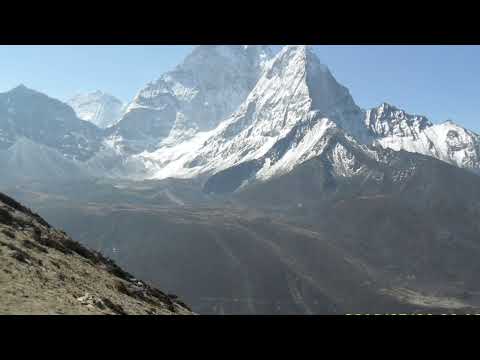
Trek Video
TripAdvisor Reviews
FAQs
Yes. The helicopter flight from the Everest region back to Kathmandu (or via Lukla, depending on weather and operational requirements) is included in this itinerary.
The helicopter usually departs from Gorak Shep after your Kala Patthar hike. Flight routes may vary depending on weather conditions and operational requirements.
The helicopter journey typically takes around 15–20 minutes to Lukla, followed by a connecting flight or helicopter to Kathmandu. Private charters may follow a different route depending on conditions.
Absolutely. This itinerary includes the full Everest Base Camp trek on foot. The helicopter replaces only the return journey after you complete the trek.
Yes, provided you have good physical fitness and are prepared for several days of trekking at high altitude. No technical climbing experience is required.
The highest point is Kala Patthar (5,545m / 18,192ft), one of the best viewpoints for panoramic views of Mount Everest and the surrounding Himalayan peaks.
Yes. Since you'll trek above 5,000 meters, there is a risk of altitude sickness. The itinerary includes acclimatization days in Namche Bazaar and Dingboche to help your body adjust.
Helicopter flights are weather-dependent. If conditions are unsafe, your operator will usually reschedule the flight for the next available weather window or arrange an alternative plan according to their policy.
You'll stay in a hotel in Kathmandu and comfortable teahouses during the trek. Rooms are generally twin-sharing with basic facilities available along the route.
You'll need a Sagarmatha National Park Entry Permit and a Khumbu Pasang Lhamu Rural Municipality Permit. These permits are typically arranged as part of the package.
The best seasons are spring (March–May) and autumn (September–November), when the weather is generally stable and mountain views are at their clearest.
Yes. Many operators offer private helicopter charters for travelers who prefer greater flexibility and privacy. Additional charges usually apply.
Pack warm layered clothing, waterproof outerwear, sturdy trekking boots, gloves, a hat, sunglasses, sunscreen, a reusable water bottle, and essential personal medications. A detailed packing list is usually provided before departure.
This trek is considered moderate to challenging. Expect to walk 5–7 hours per day on varied mountain terrain while gradually gaining altitude.
The helicopter return saves several days of walking, reduces physical strain on your knees and joints, and rewards you with breathtaking aerial views of Everest, the Khumbu Glacier, and the surrounding Himalayan landscape—making for an unforgettable finish to your adventure.