
Rara 7 Days Tour
US $499

Most treks near Kathmandu ask you to pick one thing: mountain scenery, a sacred lake, or genuine village culture. This route doesn’t make you choose. Over 17 days, you’ll walk through three connected regions — Langtang Valley, the sacred lakes of Gosaikunda, and the quiet villages of Helambu — moving from glacier-fed valleys to a 5,000m viewpoint, over a high mountain pass, and down into terraced Hyolmo farmland, without ever backtracking over the same ground twice.
The trek starts just north of Kathmandu, following the Trishuli River up into Rasuwa district and Langtang National Park — Nepal’s first Himalayan national park, established in 1976. From there, the route climbs to Kyanjin Gompa and the high viewpoint of Tserko Ri, crosses over to the sacred lakes at Gosaikunda via Lauribina Pass, and finishes by descending through the Hyolmo villages of Helambu back toward Kathmandu. It’s genuinely one continuous journey rather than three separate treks stitched together.
This route suits a wide range of trekkers, including:
The standalone Langtang Valley trek is a genuinely good introduction to the region — roughly 7-8 days, with strong glacier views and a stop at Kyanjin Gompa. It’s shorter and easier than this combined route, and that’s exactly the point of it.
This combined trek includes everything Langtang Valley offers, then adds Gosaikunda’s sacred lakes and the Hyolmo villages of Helambu on top. That means more diverse landscapes, considerably more cultural variety, and a genuinely more complete picture of this whole side of Nepal — not just one valley, but three connected regions experienced as a single journey.
If you only have about a week, the standalone Langtang Valley trek is the better fit. If you want the fuller experience and have closer to 3 weeks, this combined route delivers a lot more for a moderate increase in time and effort.
Tserko Ri sits at roughly 5,000m, above Kyanjin Gompa, and it’s genuinely one of the best viewpoints in the Langtang region. From the summit, you get a 360-degree panorama that takes in Langtang Lirung (7,227m), the sacred, thunderbolt-shaped peak of Dorje Lakpa (around 6,966m), and on a clear day, Shishapangma (8,027m) rising just across the border in Tibet — one of the few points in Nepal where an 8,000m peak in another country is clearly visible. Getting there means an early, cold start and a genuinely demanding climb over loose scree, but the sunrise from the top, with glaciers and peaks in every direction, is the kind of view that’s hard to properly describe until you’ve stood there yourself.
This entire first stretch of the trek runs through Langtang National Park, established in 1976 as Nepal’s first Himalayan national park and its fourth protected area overall. It’s also Nepal’s first designated snow leopard conservation area, later expanded to protect red pandas as well. As you climb, the forest shifts constantly — rhododendron and bamboo lower down, giving way to pine, then thinning into open alpine terrain near Kyanjin Gompa. Wildlife here is genuinely part of the experience, even without a guaranteed sighting: red pandas, musk deer, Himalayan tahr, langur monkeys, and the vividly colored Himalayan monal all live within the park, alongside over 250 recorded bird species.
After Langtang Gosaikunda trek and Lauribina Pass, the trek shifts into an entirely different world. Helambu is home to the Hyolmo people, a distinct ethnic community with their own language, dress, and strong Tibetan Buddhist tradition — noticeably different in character from the Tamang villages of Langtang. Villages like Melamchigaon, Tarkeghyang, and Sermathang are dotted with ancient monasteries and long prayer walls, and the terraced farmland and apple orchards here give the whole region a settled, quieter feel after the high-altitude drama of the previous stretch. It’s a genuinely good way to end the trek — not another mountain push, but a gradual return to village life at a gentler pace.
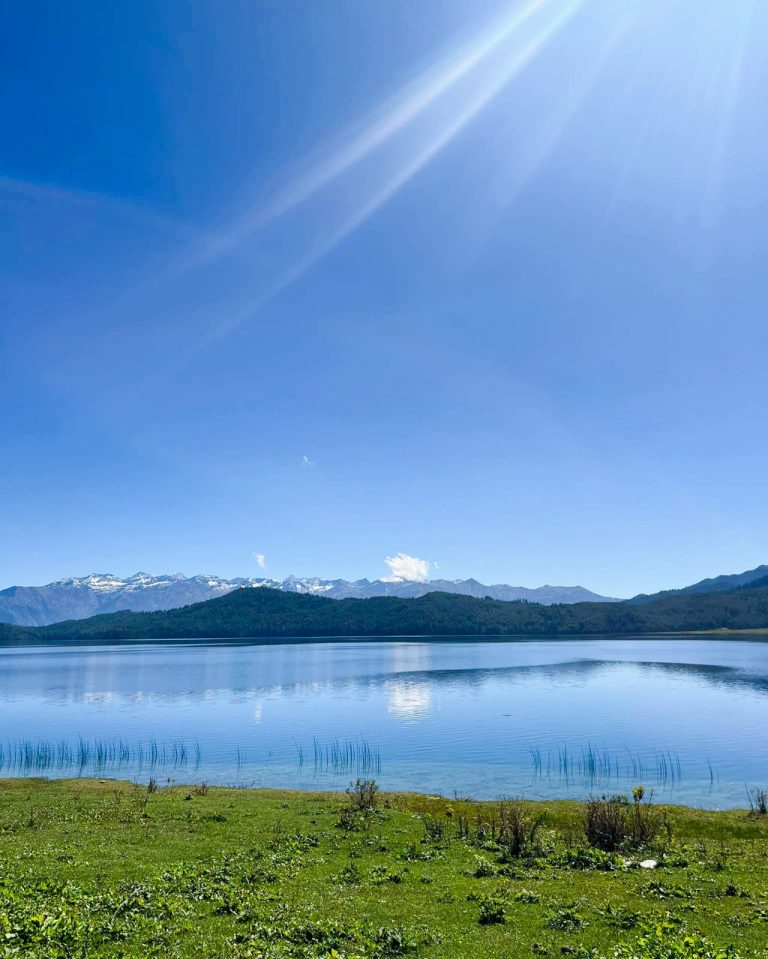
Few treks near Kathmandu offer this much visual range in one trip. Expect strong opportunities for sunrise shots from Tserko Ri, deep glacier valleys around Kyanjin Gompa, prayer flags strung across Lauribina Pass, the still, sacred water of Gosaikunda with mountains reflected on a calm day, dense forest scenes throughout Langtang National Park, wildlife sightings if you’re lucky, and genuine, unstaged village life once you reach Helambu.
Unlike many long treks that simply extend one valley, this itinerary constantly changes. You begin among the glaciers and towering peaks of Langtang Valley, continue to the sacred alpine lakes of Gosaikunda where pilgrims have gathered for centuries, then descend into the peaceful Hyolmo villages of Helambu, known for monasteries, terraced farms, and Tibetan Buddhist traditions. Every few days the landscape, culture, and atmosphere transform, making the journey feel like three separate adventures connected into one unforgettable trek.
Mornings start with breakfast in a teahouse, boots still cold from the night before. Days in Langtang mean walking beside glacial rivers and through forest thick with birdsong, with mountain views opening up more and more as the trees thin out. Around langtang Gosaikunda trek , the pace changes — colder air, thinner oxygen, and a genuine sense of arriving somewhere that matters to a lot of people for reasons beyond scenery. In Helambu, the rhythm slows again: gentler trails, terraced farmland, and villages where daily life carries on much as it always has. Evenings, wherever you are on the route, tend to end the same way — a hot meal, conversation with your guide and fellow trekkers, and an early night before the next day’s climb.
This is a long trek — 17 days, real altitude, and one demanding high-altitude viewpoint. Daily walking runs 3-8 hours, with the Tserko Ri climb and the Gosaikunda-to-Ghopte stretch being the hardest single days.
Altitude. You’ll reach roughly 5,000m at Tserko Ri and cross Lauribina Pass at high altitude as well, with several nights above 3,500m. Pace yourself, hydrate well, and take the acclimatization built into the Kyanjin Gompa stop seriously.
Permits. You’ll need a Langtang National Park entry permit and a TIMS card, both arranged as part of your booking.
Best time to go. Spring (March-May) and autumn (September-November) offer the most stable weather for both the Tserko Ri climb and the Lauribina Pass crossing.
Day 1: Arrival in Kathmandu (1,400m)
Day 2: Kathmandu sightseeing
Day 3: Drive from Kathmandu to Syabrubesi (1,550m) — 7-8 hrs
Day 4: Trek from Syabrubesi to Lama Hotel (2,380m) — 5-6 hrs
Day 5: Trek from Lama Hotel to Mundu (3,543m) via Langtang village — 6-7 hrs
Day 6: Trek from Mundu to Kyanjin Gompa (3,870m) — 4-5 hrs
Day 7: Acclimatization day in Kyanjin Gompa, climb Tserko Ri (5,000m) — 5-6 hrs
Day 8: Trek from Kyanjin Gompa to Lama Hotel — 5-6 hrs
Day 9: Trek from Lama Hotel to Thulo Syabru (2,230m) — 5-6 hrs
Day 10: Trek from Thulo Syabru to Shin Gompa — 4-5 hrs
Day 11: Trek from Shin Gompa to Gosaikunda (4,460m) — 5-6 hrs
Day 12: Cross Lauribina Pass, trek to Ghopte (3,440m) — 7-8 hrs
Day 13: Trek from Ghopte to Melamchigaon (2,560m) — 6-7 hrs
Day 14: Trek from Melamchigaon to Tarkeghyang (2,590m) — 5-6 hrs
Day 15: Trek from Tarkeghyang to Sermathang (2,610m) — 3-5 hrs
Day 16: Trek from Sermathang to Melamchi Bazaar, drive to Kathmandu — 3-4 hrs trek, 2 hrs drive
Day 17: Final departure
1. How difficult is the Langtang Gosaikunda Helambu Trek?
The trek is rated moderate to challenging. It includes daily walks of 3–8 hours, reaches around 5,000m at Tserko Ri, and crosses the high Lauribina Pass. Good fitness and some previous trekking experience are recommended.
2. What is the highest point of the trek?
The highest point is Tserko Ri (5,000m), followed by the high crossing near Lauribina Pass, which connects Gosaikunda with the Helambu region.
3. Is altitude sickness a concern?
Yes. Since the trek reaches around 5,000m, proper acclimatization, hydration, and a gradual ascent are important. The itinerary includes an acclimatization day at Kyanjin Gompa.
4. What permits are required?
You'll need a Langtang National Park Entry Permit and a TIMS Card, both of which are usually arranged by your trekking agency.
5. When is the best time to do this trek?
Spring (March–May) and autumn (September–November) offer the best weather, clear mountain views, blooming rhododendrons, and stable trail conditions.
6. Can beginners do this trek?
Motivated beginners with excellent fitness may complete it, but previous multi-day trekking experience is highly recommended because of the altitude and long duration.
7. What kind of accommodation is available?
Accommodation is in traditional teahouses offering simple twin-sharing rooms, local meals, and warm dining areas. Facilities become more basic at higher elevations.
8. Is Gosaikunda Lake a religious site?
Yes. Gosaikunda is one of Nepal's holiest alpine lakes and is sacred to both Hindus and Buddhists. Thousands of pilgrims visit during the Janai Purnima festival each year.
9. What wildlife might I see during the trek?
Langtang National Park is home to red pandas, Himalayan tahr, musk deer, Himalayan monal, langur monkeys, and even snow leopards, although sightings are never guaranteed.
10. Why choose this trek instead of only Langtang Valley?
This itinerary combines three unique trekking regions—Langtang Valley, Gosaikunda, and Helambu—giving you glacier scenery, sacred lakes, high mountain passes, and rich Tamang and Hyolmo cultures in one continuous adventure.
