
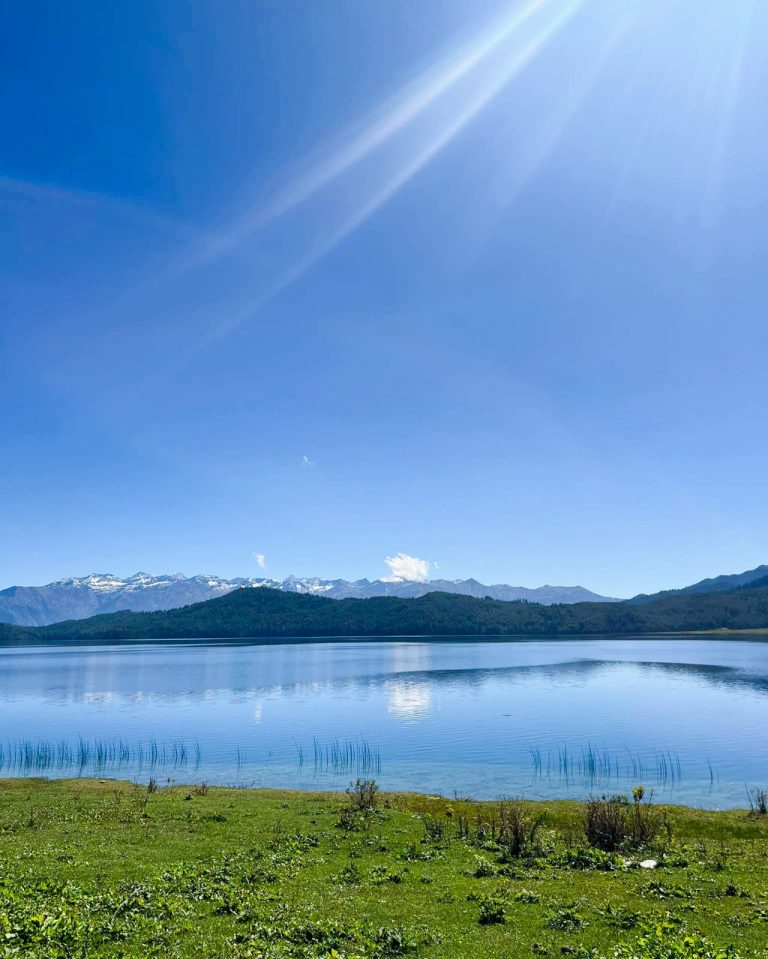
Rara 7 Days Tour
US $499

If you’re already in Pokhara and only have a few days to spare, this trek gets you to one of Nepal’s most famous mountain viewpoints and back in under a week. Over four days, you’ll climb through rhododendron forest and traditional Gurung and Magar villages, and stand on Poon Hill (3,210m) as the sun comes up over Dhaulagiri and Annapurna — all without the extra travel days a longer itinerary would add.
The trek starts and ends in Pokhara, with a short drive to Nayapul where the walking begins. From there, the trail follows the river up through Ulleri and Banthanti to Ghorepani, climbs to Poon Hill for sunrise, and loops back down through Tadapani and Ghandruk. It’s a compact version of the classic Poon Hill route — same sunrise, same mountain views, same rhododendron forest, just fitted into four days instead of seven.
This trek is ideal for travelers who want a genuine Himalayan trekking experience without committing to a long expedition. It’s particularly suitable for first-time trekkers, families, couples, solo travelers, photographers, and older travelers looking for moderate walking days with outstanding mountain scenery.
It’s also a strong choice for anyone with only a few days available in Nepal who still wants to see one of the country’s most famous sunrise viewpoints. If Everest Base Camp or Annapurna Base Camp sounds too long or physically demanding, this trek delivers a lot of Nepal’s classic mountain experience in a much shorter window.
The 7-day itinerary adds extra travel days through Kathmandu and moves at a slower overall pace. This 4-day version is built for travelers who are already in Pokhara, or who’d rather spend their limited time actually in the Annapurna region instead of on transit days.
Choose this trek if you want to:
If you have more time and want to add Kathmandu sightseeing or trek at a slower pace, the 7-day version is the better fit. Otherwise, this itinerary gets you the same famous sunrise and the same mountain views in a more time-efficient package.
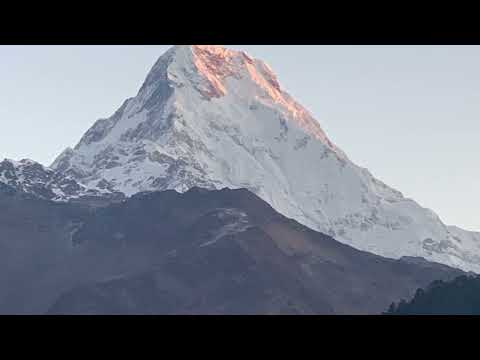
You’ll leave Ghorepani in the dark, climbing by headlamp with the cold really setting in. Then the sky starts to change — first a pale glow on the horizon, then color, then the peaks themselves catching light one by one. Dhaulagiri goes gold first, then Annapurna South, Hiunchuli, and Machhapuchhre follow. It only lasts a few minutes, but it’s the moment most people remember longest after the trek is over.
Trek in spring and the forest around Ulleri and Ghorepani turns into one of the most colorful stretches of trail in Nepal — entire hillsides of red, pink, and white blossoms, with Nepal’s national flower blooming by the thousand. Outside spring, the same forest is still a genuinely pleasant walk: cool, shaded, and quiet, a nice contrast to the more open mountain views elsewhere on the route.
Mornings start early and end with a proper breakfast before the day’s climb. Most of the walking alternates between stone steps and forest trail, with river crossings and small villages breaking up the climb. On the Poon Hill morning, the routine flips — you’re up while it’s still dark, climbing in the cold, then standing at the viewpoint as the sunrise makes the early start worth it. Evenings are simple: a hot meal, a warm teahouse dining room, and an early night before the next day’s walk.
This trek is graded easy to moderate — no technical climbing, and a well-established trail throughout. Daily walking runs 5-7 hours, with the climb into Ulleri (over 3,000 stone steps) being the toughest single stretch.
Altitude. The highest point is Poon Hill at 3,210m, well below the altitude where sickness becomes a real concern. Still, pace yourself and drink plenty of water, especially on the steeper days.
Permits. You’ll need an Annapurna Conservation Area Permit (ACAP) and a licensed guide, both arranged as part of your booking.
Best time to go. Spring (March-May) for rhododendron blooms, or autumn (September-November) for the clearest mountain views.
Day 1: Drive from Pokhara (827m) to Nayapul, trek to Ulleri (1,940m) — 80 min drive, 5-6 hrs trek
Day 2: Trek from Ulleri to Ghorepani (2,750m) — 5 hrs
Day 3: Trek from Ghorepani via Poon Hill (3,210m) to Tadapani (2,630m) — 6-7 hrs
Day 4: Trek from Tadapani to Pokhara via Ghandruk (1,940m) — 6-7 hrs trek, 80 min drive
Day 1: Drive from Pokhara to Nayapul, trek to Ulleri (1,940m)
80 min drive, 5-6 hrs trek A short drive from Pokhara to the trailhead at Nayapul, then a walk along the river up through Birethanti and into Ulleri. The final stretch into the village climbs more than 3,000 stone steps — a proper first test for your legs — but Ulleri rewards you with genuinely good early views of the Annapurna range.
Day 2: Trek from Ulleri to Ghorepani (2,750m)
5 hrs The trail continues north through Banthanti, climbing steadily through thick rhododendron forest. Ghorepani itself is a village shaped by generations of Gurung and Magar families, including the Poon Magar community the hill above it is named after.
Day 3: Trek from Ghorepani via Poon Hill (3,210m) to Tadapani (2,630m)
6-7 hrs An early, dark start for the short climb to Poon Hill. On a clear morning, you'll see Dhaulagiri, Annapurna I, Nilgiri, Machhapuchhre, Lamjung Himal, and Hiunchuli — including two of the world's 8,000-meter peaks — all lit up by the same sunrise. After breakfast back in Ghorepani, the trail continues through more rhododendron forest to Tadapani.
Day 4: Trek from Tadapani to Pokhara via Ghandruk (1,940m)
6-7 hrs trek, 80 min drive A descent through forest into Ghandruk, one of the larger Gurung villages in the region, before continuing down to the roadhead and a drive back into Pokhara — closing out the trek.
Note: trail conditions and daily pace can shift slightly depending on weather and season — your guide will confirm the exact plan day to day.
The trek is considered easy to moderate. Most days involve 5–7 hours of walking on well-maintained trails. While there are some steep stone staircases, especially near Ulleri, no technical climbing experience is required.
The highest point is Poon Hill (3,210m / 10,532ft), one of Nepal's most famous sunrise viewpoints overlooking the Annapurna and Dhaulagiri mountain ranges.
Yes. This is one of Nepal's best beginner-friendly Himalayan treks. Anyone with a reasonable level of fitness can complete it comfortably.
Spring (March to May) offers colorful rhododendron blooms, while autumn (September to November) provides clear skies and excellent mountain views. Both seasons are ideal.
No previous trekking experience is necessary. The route is well-established, and a professional guide helps ensure a safe and enjoyable journey.
Altitude sickness is uncommon because the highest elevation is only 3,210 meters. Staying hydrated and maintaining a steady pace is usually enough for most trekkers.
On a clear day, you'll enjoy panoramic views of Annapurna South, Annapurna I, Dhaulagiri, Machhapuchhre (Fishtail), Hiunchuli, Nilgiri, and several other Himalayan peaks.
Accommodation is in comfortable local teahouses with twin-sharing rooms. Most lodges provide warm meals, shared bathrooms, and welcoming hospitality throughout the trek.
Yes. Thanks to its moderate altitude and relatively short duration, the trek is an excellent choice for families, older travelers, and anyone seeking a rewarding Himalayan experience without extreme physical demands.
The 4-day version is perfect for travelers who are already in Pokhara or have limited time. It offers the same iconic Poon Hill sunrise and mountain scenery while eliminating the additional Kathmandu travel days included in the 7-day itinerary.
You'll need an Annapurna Conservation Area Permit (ACAP). If regulations require it, a licensed trekking guide will also be arranged as part of your trip.
Bring comfortable trekking boots, layered clothing, a warm jacket, rain protection (depending on the season), sunscreen, sunglasses, a reusable water bottle, trekking poles (optional), and a small daypack for daily essentials.
