Kanchenjunga North Base Camp Trek – 17 Days
-
Accommodation Tourist-standard hotel in Kathmandu; basic teahouses/lodges during the trek
-
Duration 17
-
Trip Difficulty Difficulte
-
Activities Trekking, Nature Walks, Wildlife Observation, Mountain Photography, Cultural Exploration, Village Visits, Glacier & Moraine Hiking
-
Best Time Spring (March–May) and Autumn (September–November)
-
Max. Elevation 5,388 m / 17,677 ft (Kanchenjunga North Base Camp)
-
Group Size Min-02 pax
-
Transportation Domestic flights, private vehicle, and shared/local jeep
-
Meals Breakfast in Kathmandu; Breakfast, Lunch & Dinner during the trek
-
Start/End Kathmandu / Kathmandu
Overview
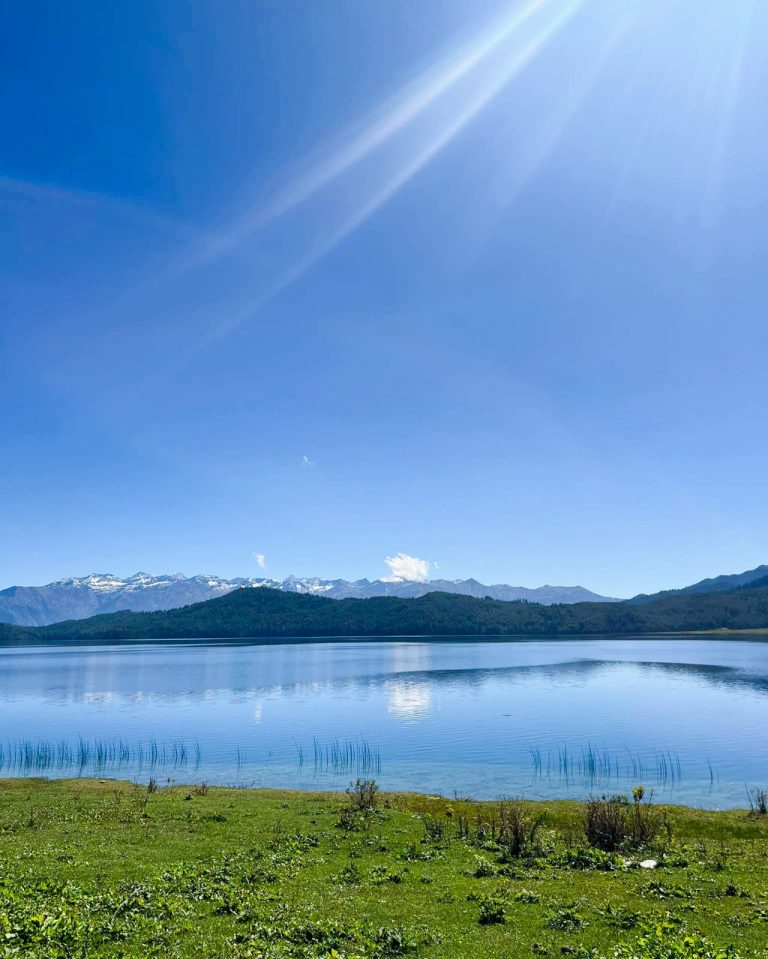
Not every remote Himalayan trek has to take nearly a month. This 17-day route reaches Kanchenjunga North Base Camp through the same untouched valleys, ancient villages, and glacier landscapes as the longer expedition — just in a more time-efficient itinerary. If your goal is to stand beneath the immense north face of the world’s third-highest mountain without giving up three full weeks of your life to get there, this is the route built for that.
Kanchenjunga itself carries real cultural weight for the communities who live in its shadow. The name translates to roughly “Five Treasures of the Great Snow,” referring to its five distinct summits, each believed to represent a sacred treasure — gold, silver, gems, grain, and holy scripture. This trek takes you through the villages of the people who hold that belief: Limbu and Rai communities in the lower valleys, and Tibetan-influenced settlements higher up, in one of the most remote corners of Nepal.
Why Choose This Trek?
- Pangpema (North Base Camp) — standing directly beneath Kanchenjunga’s massive north face.
- The Kanchenjunga Conservation Area — a genuinely important, protected wilderness, not just scenery.
- Rare wildlife habitat — home to species you won’t encounter on Nepal’s busier trekking routes.
- Limbu, Rai, and Tibetan communities — real villages, not ones shaped by decades of trekking tourism.
- Significantly less time than the classic expedition — the same destination, without the full month.
- Giant glaciers — genuinely close, genuinely impressive.
- Very few other trekkers — long stretches of trail where you’ll see almost nobody else.
- An authentic teahouse experience — simple, real, and a world away from the developed lodges of Everest or Annapurna.
Who Is This Trek Best For?
This trek suits a slightly different crowd than the full 23-day expedition:
- Experienced trekkers with limited vacation time, who still want a genuinely remote destination
- Repeat visitors to Nepal looking for something well off the standard circuit
- Nature photographers after landscapes very few people have photographed
- Wildlife lovers, given how much of the trek runs through protected habitat
- Adventure seekers wanting real solitude, not just a quieter version of a busy trail
- Anyone after a remote Himalayan trek that doesn’t demand a month-long itinerary
Why Choose the 17-Day Trek Instead of the 23-Day Expedition?
Both versions reach the same destination — Pangpema, directly beneath Kanchenjunga’s north face. The difference is how you get there and how much time you spend doing it.
The 17-day trek gets you there faster, largely thanks to a jeep road built in 2020 (originally for a hydropower project) that now runs from Taplejung all the way to Sekathum — a stretch that used to take two full trekking days on foot. That means less overall walking, the same North Base Camp experience, and a route that fits into a shorter holiday.
The 23-day expedition trades that speed for a slower, more immersive pace — more villages explored properly rather than passed through, more acclimatization built in, and generally a fuller sense of the region rather than a direct route to one destination.
If your priority is reaching Pangpema without giving up a month of your life, this 17-day version delivers exactly that. If you want the complete, unhurried version of the Kanchenjunga region, the 23-day Kanchenjunga North Base Camp expedition is the better fit.
Why This Trek Is Worth the Long Journey
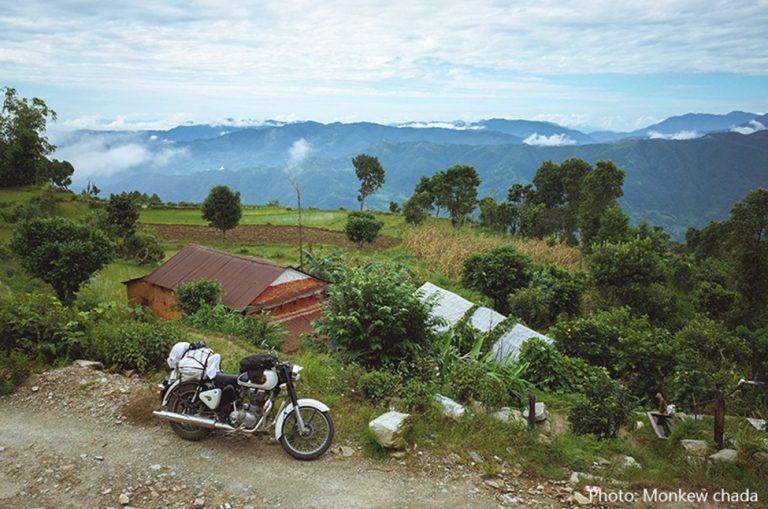
Look at this trek on a map and the first reaction is usually the same: “that’s really far.” It is — and that’s genuinely part of what makes it worth doing. The journey itself is part of the adventure here, not just a means of getting to the trailhead. You’ll fly into Bhadrapur in Nepal’s flat southern Terai, then drive up through Ilam’s rolling tea gardens — genuinely one of Nepal’s most underrated landscapes — before the road climbs into increasingly remote hill country. Villages get smaller and further apart. The landscape shifts constantly: tea plantations give way to terraced farmland, then forest, then genuine wilderness. By the time you reach the trailhead, you’ve already seen a side of Nepal that most travelers, even seasoned ones, never do. Eastern Nepal still feels genuinely untouched — and getting there the long way is exactly what makes arriving feel earned.
Walking Through Nepal’s Forgotten East
Once the trek itself begins, the landscape keeps shifting. From Sekathum, the trail climbs through bamboo groves and dense forest, crossing the Ghunsa Khola on suspension bridges as the valley narrows. Higher up, pine and rhododendron forest give way to open alpine terrain, and Tibetan cultural influence becomes more visible in villages like Ghunsa. By the time you reach Kambachen and Lhonak, trees have disappeared entirely, replaced by glacial moraine and bare rock. It’s a genuinely different environment every few days — and for most of it, you’ll have the trail largely to yourself.
Pangpema: Where the Mountain Fills the Sky
Forget “base camp” as just a checkpoint on an itinerary. At Pangpema, Kanchenjunga’s north face rises almost directly in front of you — a genuinely overwhelming wall of rock and ice that fills your entire field of view. It’s a different kind of moment than reaching Everest Base Camp, where the mountain itself stays mostly hidden behind the Khumbu Icefall. Here, there’s nothing between you and the mountain.
A Day in the Life
Mornings start early, with breakfast in a simple teahouse before a day of walking through forest, past glacial rivers, and through villages where farming, not tourism, is still the main way of life. As you climb higher, the villages thin out and the trail gets rockier and quieter, with long stretches where the only sound is wind and running water. Lunch happens wherever the trail allows — a flat rock, a clearing with a view. By evening, you’re back in a basic lodge, sharing the day’s climb with your guide and porters, aware that very few other trekkers anywhere in Nepal are having this same experience that week.
Why Experienced Trekkers Love This Route
Trekkers who’ve already done Everest or Annapurna tend to seek out routes like this one specifically for what they don’t have: crowds, developed infrastructure, and a trail reshaped by mass tourism. This route offers real solitude, genuine wildlife habitat, and a mountain view most people will never see in person — all without demanding the full month that the complete Kanchenjunga circuit requires.
Why Kanchenjunga Feels So Wild
People often describe Kanchenjunga as Nepal’s last great wilderness, and once you’re on the trail, it’s easy to understand why. Roads disappear, villages become fewer and farther between, and entire days can pass without meeting another trekking group. There are no busy tea house hubs or long lines of hikers climbing toward the same viewpoint. Instead, you’ll hear glacial rivers, birds in the forest, and the wind moving through the valleys. That sense of genuine isolation is becoming increasingly rare in the Himalayas, and it’s one of the biggest reasons experienced trekkers choose Kanchenjunga over more famous destinations.
Trek Difficulty
This is still a demanding, high-altitude trek, even in its shorter form. Daily walking runs 4-7 hours, with genuinely remote terrain and limited infrastructure once you’re past Sekathum.
Altitude. You’ll reach roughly 5,388m at Pangpema, with two acclimatization days built in — at Ghunsa and Kambachen. Given how remote this region is, take altitude seriously: pace yourself, hydrate, and communicate clearly with your guide.
Permits. You’ll need a Kanchenjunga Restricted Area Permit and a Kanchenjunga Conservation Area Permit (KCAP), both processed through a registered trekking agency. As of March 2026, Nepal removed the rule requiring a minimum of two trekkers per restricted-area permit, so solo travelers can now do this trek with a licensed guide.
Best time to go. Spring (March-May) and autumn (September-November) offer the most stable weather for this route.
Some treks are famous because everyone does them. Kanchenjunga is different. It remains one of the few places in the Himalayas where the journey still feels like a true expedition, where villages remain authentic, trails stay quiet, and the mountains dominate every horizon. Standing beneath the north face of the world’s third-highest peak isn’t simply another trekking achievement—it’s an experience that reminds you just how vast and untamed the Himalayas still are.
Outline Itinerary
Day 1: Fly from Kathmandu to Bhadrapur, drive to Fikkal/Kanyam (1,500m) — 4-5 hrs
Day 2: Drive from Fikkal/Kanyam to Taplejung (1,800m) — 4-5 hrs
Day 3: Drive from Taplejung to Sekathum (1,600m) — 5-6 hrs
Day 4: Trek from Sekathum to Amjilosa (2,510m) — 5 hrs
Day 5: Trek from Amjilosa to Gyabla (2,730m) — 4 hrs
Day 6: Trek from Gyabla to Ghunsa (3,595m) — 4 hrs
Day 7: Acclimatization day in Ghunsa (3,595m)
Day 8: Trek from Ghunsa to Kambachen (4,100m) — 4 hrs
Day 9: Acclimatization day in Kambachen (4,100m)
Day 10: Trek from Kambachen to Lhonak (4,780m) — 6-7 hrs
Day 11: Day trip to Kanchenjunga North Base Camp (Pangpema)
Day 12: Trek from Lhonak to Kambachen (4,050m) — 5-6 hrs
Day 13: Trek from Kambachen to Ghunsa (3,595m) — 5-6 hrs
Day 14: Trek from Ghunsa to Thangem (2,300m) — 5-6 hrs
Day 15: Trek from Thangem to Sekathum (1,500m) — 4-6 hrs
Day 16: Drive from Sekathum to Taplejung
Day 17: Drive from Taplejung to Bhadrapur, fly to Kathmandu
Detailed Itinerary
Day 1: Fly from Kathmandu to Bhadrapur, drive to Fikkal/Kanyam (1,500m) — 4-5 hrs A short flight to Bhadrapur in Nepal's flat southern Terai, then a drive up into the hills of Ilam district, passing through rolling tea gardens on the way to Fikkal or Kanyam.
Day 2: Drive from Fikkal/Kanyam to Taplejung (1,800m) — 4-5 hrs The road continues climbing into increasingly remote hill country, with your first real views of Kanchenjunga appearing along the way. Taplejung is the district headquarters and gateway to the whole region.
Day 3: Drive from Taplejung to Sekathum (1,600m) — 5-6 hrs A rough jeep track along the Tamor and Ghunsa rivers, passing the villages of Mitlung and Chirwa — stops that older itineraries used to trek through over two full days, now covered by road since a hydropower project brought this route through in 2020.
Day 4: Trek from Sekathum to Amjilosa (2,510m) — 5 hrs The trek proper begins here. The trail climbs steadily along the Ghunsa Khola, crossing suspension bridges through dense forest as the valley narrows.
Day 5: Trek from Amjilosa to Gyabla (2,730m) — 4 hrs Continuing through pine and rhododendron forest, with Tibetan cultural influence becoming more visible the higher you climb.
Day 6: Trek from Gyabla to Ghunsa (3,595m) — 4 hrs Ghunsa is the main hub of the upper valley — a Tibetan-influenced village with monasteries, and your first acclimatization stop.
Day 7: Acclimatization day in Ghunsa (3,595m) A rest day to help your body adjust, with optional short hikes above the village.
Day 8: Trek from Ghunsa to Kambachen (4,100m) — 4 hrs The trail climbs above the treeline into open, high-altitude terrain, with wide views of the peaks surrounding the upper valley.
Day 9: Acclimatization day in Kambachen (4,100m) A second rest day before pushing higher, important given how quickly the altitude climbs from here.
Day 10: Trek from Kambachen to Lhonak (4,780m) — 6-7 hrs A stark, high-altitude walk across glacial moraine into Lhonak, a small seasonal settlement close to the ice.
Day 11: Day trip to Kanchenjunga North Base Camp (Pangpema) The main event. Pangpema puts you directly beneath Kanchenjunga's north face — one of the most overwhelming mountain views in Nepal. You'll return to Lhonak for the night afterward.
Day 12: Trek from Lhonak to Kambachen (4,050m) — 5-6 hrs The return journey begins, retracing the route back down through the moraine.
Day 13: Trek from Kambachen to Ghunsa (3,595m) — 5-6 hrs Back down through familiar terrain, with the air noticeably warmer as you lose altitude.
Day 14: Trek from Ghunsa to Thangem (2,300m) — 5-6 hrs A different route down from the way up, passing through Thangem rather than retracing every step of the ascent.
Day 15: Trek from Thangem to Sekathum (1,500m) — 4-6 hrs The final trekking day, back down to the roadhead at Sekathum.
Day 16: Drive from Sekathum to Taplejung Back on the road, retracing the route from Day 3.
Day 17: Drive from Taplejung to Bhadrapur, fly to Kathmandu The final leg back to the capital, closing out the trip.
Note: this itinerary relies on the Taplejung-Sekathum road, which can be affected by landslides or poor conditions, particularly during monsoon — your operator will confirm current road status before departure.
Includes & Excludes
Includes
- Airport transportation
- Farewell dinner
- Accommodation 3 nights in Kathmandu with Bed and breakfast
- Kathmandu sightseeing by private vehicle
- Professional government registered Tourist Guide
- Kathmandu to Bhadrapur by domestic flight
- Bhadrapur to Kathmandu by domestic flight
- Transportation from the starting and ending point of trekking by private vehicle
- Three meals and tea, coffee during the trek
- Safe drinking water( treated with chlorine and iodine)
- Permit of the trek(TIMS, Conservation, and National park fee)
- All types of necessary government paperwork and government taxes
- Guide and porter(meals, wages, Insurance & transpiration )
- An English speaking government registered guide and porter
- Trekking equipment like a raincoat, sleeping bag, down jacket, and walking pole
Excludes
- Personal expenses
- Personal & medical insurance
- Rescue evacuation by Helicopter in Emergency case
- Beverage and Bar bills( soft drinks, hard drinks, and mineral water)
- Boiled water
- Lunch & Dinner in Kathmandu except for welcome and farewell dinner
- Electronic devise recharge
- Wi-fi during the trek
- Tips for Guide and Porter
Packing List
The Primary goal of your equipment is to ensure you remain warm, dry and shielded from the sun your kit should allow for agile movement during the day and Maximum comfort during overnight stays.
- Daypack: Should be approximately 8-10 kg.
- Main Duffle Bag: Should target a weight of 15 kg.
- Lugging Gear: Use an 80l duffle for your porter and a 40 L Daypack for your own personal carry.
- Outer Protection: Wind proof and water proof top and bottom shells to guard against the elements.
- Warmth Layers: A system of fleeces, Pants, tops, and gloves plus headwear for both sun protection and freezing temperatures.
- First Layers: Lightweight, moisture wicking garments for cold starts or evenings.
- Footwear: Durable, water-resistant trekking boots complemented by lighter shoes for use inside lodges.
- Resting Gear: A high-quality 3 to 4 season sleeping bag paired with a full sized sleeping mat.
- Hydration: Containers for water storage along with necessary filtration or purification tools.
- Hygiene and Health: A travel wash kit and a comprehensive first aid pack for personal medical needs.
TripAdvisor Reviews
FAQs
The trek is considered challenging due to its remote location, high altitude, and multiple days of continuous trekking. While no technical climbing is required, previous trekking experience and good physical fitness are strongly recommended.
The highest point is Kanchenjunga North Base Camp (Pangpema) at approximately 5,388 meters (17,677 ft).
Yes. This trek is best suited for trekkers who have already completed at least one multi-day Himalayan trek or have experience hiking at high altitude.
This is not recommended as a first Himalayan trek. The remoteness, altitude, and limited facilities make it better suited to experienced trekkers.
Yes. Since Nepal updated its regulations in 2026, solo travelers can obtain a Kanchenjunga Restricted Area Permit through a registered trekking agency, but a licensed guide remains mandatory.
You'll need:
- Kanchenjunga Restricted Area Permit (KRAP)
- Kanchenjunga Conservation Area Permit (KCAP)
Snow Bank Adventure arranges all permits before your trek.
The best seasons are:
- Spring (March–May) for blooming rhododendrons and stable weather.
- Autumn (September–November) for clear mountain views and comfortable trekking conditions.
Yes. Basic teahouses are available along the route, although facilities are much simpler than those found on the Everest or Annapurna trekking routes.
Yes. The trek reaches over 5,300 meters, so proper acclimatization, hydration, and a gradual ascent are essential. Two acclimatization days are included in the itinerary to reduce the risk.
The Kanchenjunga Conservation Area is home to Himalayan wildlife including red pandas, Himalayan black bears, blue sheep, musk deer, Himalayan monals, and even the elusive snow leopard, although sightings are rare.
Its remote location, restricted-area permit requirements, and longer travel time mean far fewer trekkers visit each year, making it one of Nepal's quietest trekking destinations.
Unlike Everest Base Camp, where Everest itself is largely hidden by surrounding terrain, Pangpema offers an unobstructed view of Kanchenjunga's enormous north face, creating one of the most dramatic mountain panoramas in the Himalayas.