


Upper Mustang Motorcycle Ride – 4 Days
-
Accommodation Local Lodge / Guesthouse
-
Duration 4
-
Trip Difficulty Moderate
-
Activities Motorcycle Adventure, Sightseeing & Cultural Exploration
-
Best Time Spring (March–May) & Autumn (September–November)
-
Max. Elevation Lo Manthang (3,840 m / 12,598 ft)
-
Group Size Min-04 pax
-
Transportation Private Vehicle & Motorcycle
-
Meals Breakfast
-
Start/End Kathmandu/Kathmandu
Overview
Ride into Nepal’s remote Upper Mustang region on a four-day motorcycle journey through the Kali Gandaki Gorge, high-altitude desert, and the walled city of Lo Manthang. You’ll start in the green hills and river valleys of central Nepal and end up somewhere that barely feels like the same country — bare cliffs, wind-carved rock, and Tibetan-influenced villages that have kept their culture largely unchanged for centuries.
The route runs from Kathmandu through Beni, Tatopani, Ghasa, and Marpha to Jomsom, then on to Kagbeni, Tsarang, and Lo Manthang, the old capital of the former Kingdom of Lo and still one of the most culturally significant towns in the Himalayas. Along the way, you’ll pass river gorges, remote settlements, and monasteries, with the Annapurna and Dhaulagiri ranges in view for much of the ride.
What sets this trip apart from a normal road trip is the riding itself. The terrain is rough, with loose gravel, river crossings, and narrow cliffside tracks in places, so it demands real riding skill, not just a strong bike. That’s part of the appeal for most riders who choose this route.
Trip Highlights
- Ride through Kali Gandaki Gorge often called one of the deepest gorges in the world, flanked by Annapurna and Dhaulagiri
- Visit Lo Manthang the walled former capital of the Kingdom of Lo
- Explore Muktinath Temple a sacred site for both Hindus and Buddhists, known for its 108 water spouts and eternal flame
- Cross Nepal’s highest desert landscapes the barren, high-altitude terrain of Upper Mustang
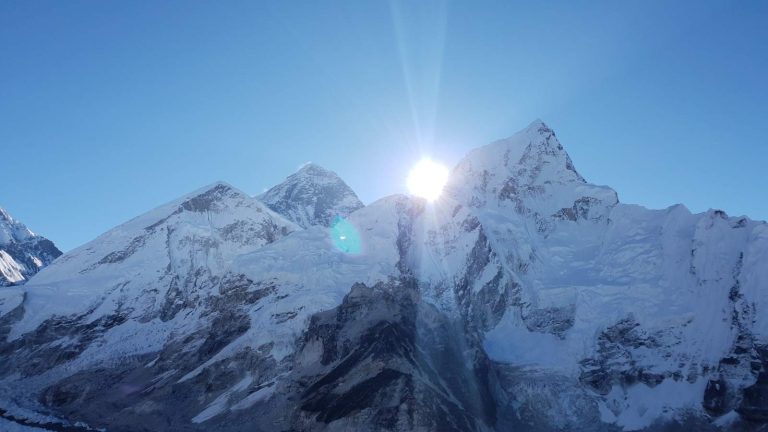
- Annapurna & Dhaulagiri views two of the world’s ten highest peaks, visible for much of the route
- Experience Tibetan culture mud-brick villages, chortens, and monasteries shaped by centuries of Tibetan Buddhist tradition
Choosing a Motorcycle
Pick a motorcycle built for rough terrain, not speed. You want good suspension, strong low-speed control, a reliable engine, and enough ground clearance to handle rocks and river crossings. Riders commonly use the Royal Enfield Himalayan 450, Royal Enfield Himalayan 411, Hero Xpulse 200 4V, and KTM 390 Adventure all capable off-road and comfortable enough for multi-day riding.
Riding Conditions
This route combines paved highways, gravel roads, rocky trails, and occasional river crossings. Riders should expect dust, loose surfaces, steep climbs, and narrow mountain roads. Previous experience riding adventure or dual-sport motorcycles is strongly recommended.
Why?
Because that’s exactly what someone Googling “Upper Mustang motorcycle tour” wants to know.
Permits You’ll Need
Upper Mustang is a restricted area, so every rider needs a Restricted Area Permit alongside an Annapurna Conservation Area Permit (ACAP). Note that permit rules changed in early 2026: the old flat fee for the first 10 days was replaced with a daily rate of USD 50 per person, and the previous requirement of a minimum of two travelers has been dropped. A licensed guide is still mandatory for the restricted section beyond Kagbeni.
Outline Itinerary
Day 1: Kathmandu (1,400m) to Jomsom (2,743m) — approx. 370 km, 10-12 hours A long first day on paved highway as far as Beni, then rougher mountain road along the Kali Gandaki River into Jomsom. This is the toughest riding day of the trip, so start early and expect a full day in the saddle.
Day 2: Jomsom (2,743m) to Lo Manthang (3,840m) to Muktinath (3,800m) approx. 190 km, 9-11 hours Ride north through Kagbeni into the restricted area, climbing through desert valleys to Lo Manthang. After exploring the walled city, you’ll head back south to Muktinath for the night.
Day 3: Muktinath (3,800m) to Kusma (947m) to Pokhara (822m) — approx. 233 km combined, 9-11 hours A long descent out of the high desert and back into Nepal’s green mid-hills, finishing at Pokhara’s lakeside.
Day 4: Pokhara (822m) to Kathmandu (1,400m) — approx. 200 km, 6-8 hours The return ride on the main Kathmandu-Pokhara highway, with a rest stop or two along the way.
Note: distances and drive times can shift depending on road conditions, landslides, and the season — the Jomsom-Muktinath section in particular can be washed out during the monsoon (June-August) or snowed in during winter (December-February). Spring (March-May) and autumn (September-November) are the most reliable riding windows.
Detailed Itinerary
Day 1: Kathmandu (1,400m) to Jomsom (2,743m) Distance: approx. 370 km | Riding time: 10-12 hours, depending on road and traffic conditions
You'll leave Kathmandu early and head west on paved highway, following the Trishuli River and then the Marsyangdi as you pass through the mid-hills. The scenery shifts as you go — green forest and terraced farmland give way to the dry, dramatic terrain of the Kali Gandaki Gorge, often called one of the deepest gorges on Earth.
Past Beni, Tatopani, Ghasa, and Marpha, the climate changes fast. Subtropical forest thins out into alpine terrain — bare hillsides, juniper scrub, and rocky cliffs, with the Annapurna and Dhaulagiri ranges, including Dhaulagiri and Nilgiri peaks, coming into view along the way.
Accommodation: lodge | Meals: breakfast
Day 2: Jomsom (2,743m) to Lo Manthang (3,840m) to Muktinath (3,800m) Distance: approx. 190 km | Riding time: 9-11 hours
After breakfast, you'll ride north into Upper Mustang. Past Kagbeni — the gateway into the old Kingdom of Mustang — the landscape turns stark: deep canyons, eroded cliffs in shades of red and gold, cave systems carved into rock faces, and wide desert valleys.
Upper Mustang sits in the rain shadow of the Himalayas, so it gets very little rainfall. That's part of why the skies stay so clear and the rock formations look so sharp.
In Lo Manthang, you'll have time to walk the walled city that once served as the capital of the Kingdom of Lo. Look out for monasteries, prayer wheels, chortens, and mud-brick homes — the local Loba culture, language, and dress all carry a strong Tibetan influence.
From there, you'll ride back south to Muktinath, at roughly 3,800m. It's one of the most important pilgrimage sites in the Himalayas for both Hindus and Buddhists, set against a ring of snow-capped peaks.
Accommodation: local lodge | Meals: breakfast
Day 3: Muktinath (3,800m) to Kusma (947m), then on to Pokhara (822m) Distance: approx. 175 km to Kusma (7-9 hours) + 58 km to Pokhara (2 hours)
Start the morning at Muktinath Temple, where pilgrims visit the 108 water spouts and the eternal flame shrine before heading back down.
As you descend, the landscape fills back in — pine forest, waterfalls, rivers, and terraced fields replace the high desert. The route runs back through Jomsom, Marpha, Tatopani, and Beni.
Kusma, in Parbat district, is worth a stop if you're staying the night — it's known for its suspension bridges over deep gorges and its growing adventure-tourism scene. From there it's a short ride on to Pokhara, a lakeside city with a noticeably milder climate and open Himalayan views.
Accommodation: local lodge | Meals: breakfast
Day 4: Pokhara (822m) to Kathmandu (1,400m) Distance: approx. 200 km | Riding time: 6-8 hours
The final leg follows river valleys and terraced hillsides back toward the capital. If skies are clear, you'll get one last look at the Annapurna range before turning east. It's a good stretch to take stock of how much the landscape has changed over four days — from Upper Mustang's high desert to the fertile, crowded hill country around Kathmandu.
You'll arrive back in Kathmandu by evening.
Accommodation: none | Meals: none
Note: distances and drive times can shift with road conditions, landslides, and season. The Jomsom-Muktinath section can wash out during monsoon (June-August) or get snowed in during winter (December-February). Spring (March-May) and autumn (September-November) are the most reliable riding windows.
Includes & Excludes
Cost Includes:
- Private transportation Pick and drop.
- 1 time meals (Breakfast)
- Visit to Upper Mustang, Kusma, Pokhara
- Local guide assistance
- Personal expenses
- Additional snacks/drinks
- Travel insurance
- Tips
TripAdvisor Reviews
FAQs
Yes. This tour is designed for riders who already have experience riding motorcycles on highways and uneven mountain roads. The route includes dirt tracks, gravel sections, river crossings, and winding mountain roads, so confident riding skills are recommended.
Most riders use adventure motorcycles such as the Royal Enfield Himalayan, KTM Adventure, Hero Xpulse, or similar models suitable for off-road and high-altitude riding.
Spring (March to May) and autumn (September to November) offer the best riding conditions. These seasons provide clear mountain views, stable weather, and comfortable temperatures.
Yes. Upper Mustang is a restricted area. Travelers need a Restricted Area Permit (RAP) and an Annapurna Conservation Area Permit (ACAP). Our team arranges all required permits before the tour.
The tour is considered moderately challenging. Riders should be comfortable handling motorcycles on rough roads, rocky trails, steep climbs, and dusty terrain at high altitude.
Bring a quality riding jacket, helmet, gloves, riding boots, sunglasses, warm clothing, rain gear, sunscreen, and personal medications. Layered clothing is recommended because temperatures can change throughout the day.
Yes. Although the itinerary allows gradual ascent, the route reaches elevations above 3,800 meters. Staying hydrated, riding at a comfortable pace, and informing your guide if symptoms appear are important.
This tour is not recommended for complete beginners. Previous experience riding motorcycles on mountain roads or off-road terrain is strongly advised.