
Dhaulagiri Sanctuary and South Base Camp Trek
-
Accommodation Homestays & Fully Supported Camping
-
Duration 10
-
Trip Difficulty Moderate
-
Activities Trekking, Camping & Cultural Exploration
-
Best Time Spring (March–May) & Autumn (September–November)
-
Max. Elevation Dhaulagiri South Base Camp (4,050m / 13,287ft)
-
Group Size Min-02 pax
-
Transportation Car/Van/Jeep
-
Meals Breakfast, Lunch & Dinner (BLD) Throughout the Trek
-
Start/End Pokhara to Pokhara
Overview
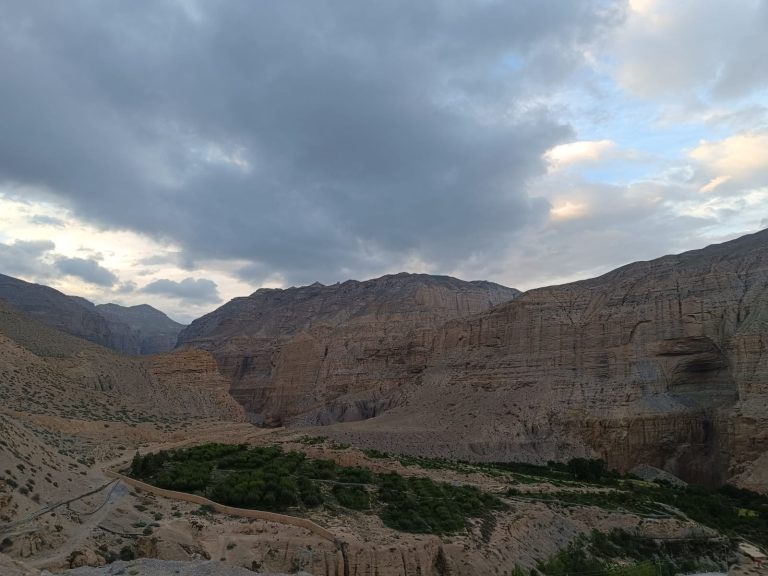
Trek into one of the most remote, least-visited corners of the Nepal Himalayas, beneath the massive south face of Mt. Dhaulagiri (8,167m) — the seventh-highest mountain on Earth. Over 10 days you’ll walk through Magar and Chhantyal villages, rhododendron forest, and open alpine terrain in Myagdi District before reaching the Dhaulagiri Sanctuary, a natural amphitheater of glaciers and rock walls at the base of the mountain itself.
This isn’t a well-trodden trail. Compared to Everest or Annapurna, almost nobody comes here, and the region has stayed close to untouched — you’ll spend your days walking through quiet villages and open wilderness rather than crowded lodges.
What Makes This Trek Different?
- Real remoteness. This is one of Nepal’s least-trekked regions — you’ll go days without seeing another trekking group.
- Camping beneath a glacier. From Phedi Camp onward, there’s no teahouse infrastructure, so you’ll camp under canvas for the final stretch up to base camp, with a full support crew handling meals and gear.
- A trail that looks technical but isn’t. Glaciers, icefalls, and steep valley walls surround you the whole way, but the trekking itself doesn’t require ropes, crampons, or climbing experience — just solid fitness and stamina.
- A true base camp experience. Unlike more developed base camp treks, Dhaulagiri South Base Camp still feels like standing at the edge of an expedition, not a tourist stop.
- Very few other trekkers. Trail traffic here is a fraction of what you’d find on Everest Base Camp or Annapurna Base Camp routes.
Trip Highlights
- Dhaulagiri South Base Camp (4,050m) — the trek’s main destination, set at the foot of the world’s seventh-highest mountain
- The Dhaulagiri Sanctuary — a natural bowl ringed by snow peaks, glaciers, and icefalls
- Massive glaciers and icefalls — up close, with no technical climbing required to see them
- Alpine camping — nights under canvas in one of Nepal’s wildest settings, from Phedi Camp through to base camp
- Sweeping mountain panoramas — close-up views of Dhaulagiri, Gurja Himal, and Churen Himal, plus more distant views toward the Annapurna range and Nilgiri
- Traditional Magar and Chhantyal villages — including Jhi and Ghyasikharka, where homestays give you a real look at daily life in the hills
A note on scope: this itinerary is the shorter “South Base Camp” route via Jhi and Ghyasikharka. It doesn’t cross French Pass or reach Hidden Valley or Italian Base Camp — those are part of the longer Dhaulagiri Circuit trek (typically 16+ days), which starts from a different trailhead. If you want those specific spots, ask about the full circuit version instead.
Trek Difficulty & What to Expect
This trek is graded moderate to strenuous. There’s no technical climbing, but daily walks run 5-7 hours over genuinely rugged terrain, and there’s no way to shortcut the distance with vehicles once you leave Jhi.
Accommodation: Homestays in Jhi and Ghyasikharka, then tented camping from Phedi Camp through to base camp and partway back down, since teahouse infrastructure doesn’t reach that high in this region.
Altitude: You’ll reach 4,050m at base camp. That’s high enough to feel the thinner air, but because you spend only a couple of nights above 2,500m, the risk of serious altitude sickness is lower than on treks that stay high for much longer. Still, drink plenty of water and go at a steady pace.
Permits: You’ll need a conservation area entry permit and a TIMS card, both handled as part of your package.
Best time to go: Spring (March-May) and autumn (September-November), when trails are clearest and mountain views are most reliable.
Outline Itinerary
Day 1: Pokhara to Jhi Village via Beni (1,680m) — 3 hrs drive + short trek
Day 2: Jhi Village to Ghyasikharka (2,180m) — 5-6 hrs trek
Day 3: Ghyasikharka to Phedi Camp (2,466m) — 5-6 hrs trek
Day 4: Phedi Camp to Odar Camp (3,189m) — 5-6 hrs trek
Day 5: Odar Camp to Dhaulagiri South Base Camp (4,050m) — 6 hrs trek Day 6: Exploration day at Base Camp (4,050m)
Day 7: Base Camp to Chhari (2,022m) — 6-7 hrs trek
Day 8: Chhari to Dagnam (1,720m) — 5-6 hrs trek
Day 9: Dagnam to Rakhu Phedi — 4 hrs trek
Day 10: Drive from Rakhu Phedi to Pokhara via Beni
Detailed Itinerary
Day 1: Pokhara to Jhi Village (1,680m)
3 hrs drive, plus a short trek A rough, scenic drive out of Pokhara into Myagdi District, followed by a short walk into Jhi, a terraced-farm village where you'll spend the night in a homestay and get your first taste of local Magar hospitality.
Day 2: Jhi Village to Ghyasikharka (2,180m)
5-6 hrs The trail climbs steadily through forest and past smaller settlements, with streams and birdlife along the way. Ghyasikharka is home to many Chhantyal people, a distinct ethnic community concentrated in this part of Myagdi.
Day 3: Ghyasikharka to Phedi Camp (2,466m)
5-6 hrs The trail follows the Raghu Ganga River through steep, green hillsides. This is your last night with any village infrastructure nearby — the trek shifts to full camping from here.
Day 4: Phedi Camp to Odar Camp (3,189m)
5-6 hrs A steady climb through dense forest that gradually thins as you gain altitude. Wildlife sightings are possible on this stretch, since the terrain sees very little human traffic.
Day 5: Odar Camp to Dhaulagiri South Base Camp (4,050m)
6 hrs The trail moves out of the forest and into open alpine terrain, with Dhaulagiri's south face growing more dramatic with every hour. You'll set up camp at base camp, inside the Dhaulagiri Sanctuary itself.
Day 6: Exploration day at Base Camp (4,050m)
A full day to take in the sanctuary — glaciers, icefalls, and close-up views of Dhaulagiri, Gurja Himal, and Churen Himal. Early morning and late afternoon light are especially good for photos here.
Day 7: Base Camp to Chhari (2,022m)
6-7 hrs A long descent back down out of the high country, retracing the dramatic scenery from the way up in reverse.
Day 8: Chhari to Dagnam (1,720m)
5-6 hrs Continuing down through forest and farmland, with the terrain and climate warming noticeably as you lose altitude.
Day 9: Dagnam to Rakhu Phedi
4 hrs A shorter final trekking day, bringing you down to the roadhead at Rakhu Phedi.
Day 10: Drive from Rakhu Phedi to Pokhara via Beni
The last leg of the trip — a road journey back through Beni to Pokhara, closing out the trek.
Note: this route runs through a genuinely remote part of Nepal with limited infrastructure, so trail conditions, camp locations, and timings can shift. Your guide will confirm the day-to-day plan on the ground.
Includes & Excludes
Includes
- Jeep ride to and from the trek
- A guide who knows the area well
- All meals during the trek (breakfast, lunch, dinner)
- A place to stay in teahouses during the trek
- Permits and park fees
- Safe water to drink
- Trek gear like jackets, walking sticks, and rain covers (if you ask)
- A first-aid kit for safety
Excludes
- Extra money for snacks, drinks, or gifts
- Tips for the guide or driver
- Travel insurance
- Wi-Fi during trek
- Hotel in Kathmandu (can be added separately)
- Help if you need a rescue
TripAdvisor Reviews
FAQs
Yes. This trek is graded moderate to strenuous. Daily walks last around 5–7 hours across steep and rugged terrain, with the highest point reaching 4,050 meters. Good physical fitness and previous trekking experience are recommended.
No. Although you'll trek beneath glaciers and dramatic mountain faces, no technical climbing, ropes, crampons, or mountaineering skills are required.
The highest point is Dhaulagiri South Base Camp at 4,050 meters (13,287 feet).
The trek reaches over 4,000 meters, so mild altitude symptoms are possible. However, because you spend only a limited time at higher elevations, the risk is generally lower than on longer high-altitude expeditions. Staying hydrated and maintaining a steady pace help reduce the risk.
Accommodation includes local homestays in the lower villages and fully supported camping from Phedi Camp to Dhaulagiri South Base Camp, where no teahouses are available.
Freshly prepared meals are served throughout the trek. During the camping section, the support crew prepares breakfast, lunch, and dinner each day.
Spring (March–May) and autumn (September–November) offer the most stable weather, clear mountain views, and comfortable trekking conditions.
Yes. You'll need the required conservation area permits and a TIMS card. Your trekking agency will arrange all necessary permits before the trek begins.
This trek is not recommended for complete beginners. Previous multi-day trekking experience and good physical fitness are highly recommended due to the remote location and camping conditions.
The trek offers outstanding views of Dhaulagiri I (8,167m), Gurja Himal, Churen Himal, and, on clear days, distant views of the Annapurna range and Nilgiri.
Mobile coverage becomes unreliable as you move deeper into the sanctuary, and internet access is generally unavailable during the camping section. It's best to expect several days without reliable communication.
Unlike Nepal's busier trekking routes, the Dhaulagiri Sanctuary Trek offers true wilderness, peaceful trails, and a genuine expedition atmosphere. You'll experience remote villages, glacier landscapes, and camping beneath one of the world's highest mountains with very few other trekkers on the trail.